Is it Safe to Travel to Egypt? What the Government Advisories Say (2026)
Egypt is safe for tourists in 2026 if you stick to the main routes. Cairo, Giza, Luxor, Aswan, and the Red Sea resorts are all open and busy. The US rates Egypt at Level 2, meaning you should exercise increased caution, while Level 4 applies only to North and Middle Sinai and the border areas. Avoid those regions, and always book Western Desert trips with a licensed operator.
The first thing travelers always ask us is, “Is it safe?” That’s why we answer it right away and back it up with sources. We run tours from Luxor, Cairo, and Hurghada. Since 2010, our local Egyptologist guides have led more than 10,000 travelers from over 30 countries around Egypt. We’ve seen that official advice, news headlines, and what’s happening on the ground can differ widely.
This guide explains what the US, UK, and Canadian governments are saying right now, which areas you should avoid, the real risks you might face—like scams, theft, harassment, and traffic, which are much more common than anything dramatic—and how we would plan to avoid them.
1Is it safe to travel to Egypt right now?
Yes, it is safe for most places that tourists visit. Egypt’s main tourist areas—Cairo and Giza, Luxor, Aswan, and the Red Sea coast—are open, and no major government is advising against travel there. According to Egyptian government figures, 6.1 million people visited from January to April 2026, a 7% increase from the same period in 2025, following a 20.5% rise in 2025 overall. While there is some risk, it is mostly limited to certain regions and everyday hassles, which are explained in the sections below.
| Question | Answer (checked 27 October 2026) |
|---|---|
| Overall verdict | Safe on the main tourist routes; official advice is “increased caution”, not “do not travel” |
| US State Department | Level 2: exercise increased caution (terrorism, crime, health) |
| UK FCDO | Against all travel to North Sinai and within 20 km of the Libyan border; Red Sea resorts, Luxor and Aswan are outside the warnings |
| Canada | Exercise a high degree of caution, with regional advisories |
| Most likely problems | Scams, petty theft, unwanted attention, road traffic |
| Tourist Police | Dial 126 |
2What do the US, UK and Canadian advisories say about Egypt?
Government advisories are the best neutral yardstick because officials update them with no tour to sell. Read the full text before you travel; this is our summary of each.
| Government | Level | Where they say not to go | Where they say it is fine |
|---|---|---|---|
| United States | Level 2, increased caution (reissued 15 July 2025) | Level 4 (do not travel): Northern and Middle Sinai, and military border zones along the Libyan, Sudanese and Sinai borders. Western Desert: avoid, or go only with a licensed tour company | Everything else, with caution |
| United Kingdom (FCDO) | Regional warnings | Against all travel: North Sinai and within 20 km of the Libyan border. Against all but essential travel: northern South Sinai beyond the St Catherine–Nuweiba road, most of the Western Desert, east Ismailiyah, the Al Bawiti–Siwa road, Hala’ib Triangle and Bir Tawil | Red Sea resorts in southern Sinai (Sharm El Sheikh), Hurghada, Marsa Alam, Luxor, Aswan and Abu Simbel, Faiyum, Siwa oasis |
| Canada | High degree of caution (updated 26 May 2026) | Avoid all travel: North Sinai, parts of Port Said, Ismailia and Suez east of the canal, within 50 km of the Libyan border and most of the Western Desert. Avoid non-essential travel: northern South Sinai | Dahab, Nuweiba and Taba are excluded from the non-essential warning |
Australia has its own travel rating system through the Smartraveller service. Check it before you book, as the risk levels can change.
Here are some tips from our team. Travel advisories can change, so check them again when you book and again a week before you fly. Register with your embassy’s traveler program (US citizens can use STEP). Also, ask your insurer in writing whether your policy covers terrorism and civil unrest, since some policies don’t.
3Is Egypt safe with the war in the Middle East?
The conflict between the US, Israel, and Iran got worse in early 2026. As of March 2026, Cairo, Luxor, Aswan, Sharm El Sheikh, and Hurghada were still open and considered safe. Egyptian airspace was also open, and the UK’s main advice for these places had not changed. The main impact is on flights, not on safety at your destination.
Airlines may reroute or cancel flights if nearby airspace closes, so check your airline’s policies and your insurance for possible disruptions. Areas near Israel and Gaza, especially North Sinai, were already marked as ‘do not travel,’ and this advice remains the same.
4Which parts of Egypt are safe, and which should you avoid?
Safe areas are where almost every first-time visitor goes; no-go areas are remote, military, or border zones you have no reason to visit on holiday.
Safe and well-traveled areas
| Destination | What the advisories say | Our note |
|---|---|---|
| Cairo and Giza | Not covered by the UK regional warnings | The pyramids and the Grand Egyptian Museum draw the biggest crowds; expect police presence, bag scanners and touts, not danger |
| Luxor and the West Bank | Outside the UK warnings | Our home base. Karnak, Luxor Temple and the Valley of the Kings are open to visitors |
| Aswan and Abu Simbel | Outside the UK warnings | The usual start or end of a Nile cruise |
| Hurghada, Marsa Alam, Sharm El Sheikh | UK: low-risk Red Sea resorts | Resort and diving towns; safety here is mostly about sea conditions and sun |
| Dahab, Nuweiba, Taba | Excluded from Canada’s non-essential travel warning | Check the current advisory on the day you book, as this stretch borders the Sinai warning zone |
| Siwa oasis and Faiyum | Outside the UK warnings | The Al Bawiti–Siwa road is covered by a UK warning, so ask how your transfer is routed |
Where not to go
- North Sinai. All the governments mentioned above advise against travel here. There is no tourist reason to visit.
- The Libyan border strip. The UK advises avoiding the area within 20 km of the border, while Canada recommends avoiding the area within 50 km. It’s best to avoid both zones.
- Northern South Sinai, beyond the St Catherine to Nuweiba road. The UK advises against all but essential travel here.
- Avoid most of the Western Desert unless you are with a licensed operator. The UK does not warn against the White Desert, Black Desert, Bahariya, Farafra, Dakhla, and Kharga, but you will need permits and an official guide. Phone reception and medical care are limited. Canada also says you need a permit from Egypt’s Ministry of Interior. We do not recommend visiting this area on your own. If you want to see the White Desert, book a supervised trip, such as our 2-day White Desert safari.
- Hala’ib Triangle and Bir Tawil. These are disputed border areas and have no tourism infrastructure.
5What should you really watch out for when traveling in Egypt?
Terrorism risks
While the risk exists, it’s low for most visitors. That’s why the US puts terrorism first in its Level 2 advisory. Canada also notes that attacks can happen at any time, with possible targets including government buildings, places of worship, transport hubs, and spots popular with foreigners. They highlight higher-risk dates like around 25 January, Orthodox Easter week, 30 June to 3 July, 14 August, and some religious holidays. At major sites and hotels, you’ll go through police checkpoints and bag screening. Just treat these as routine and allow a few extra minutes for lines.
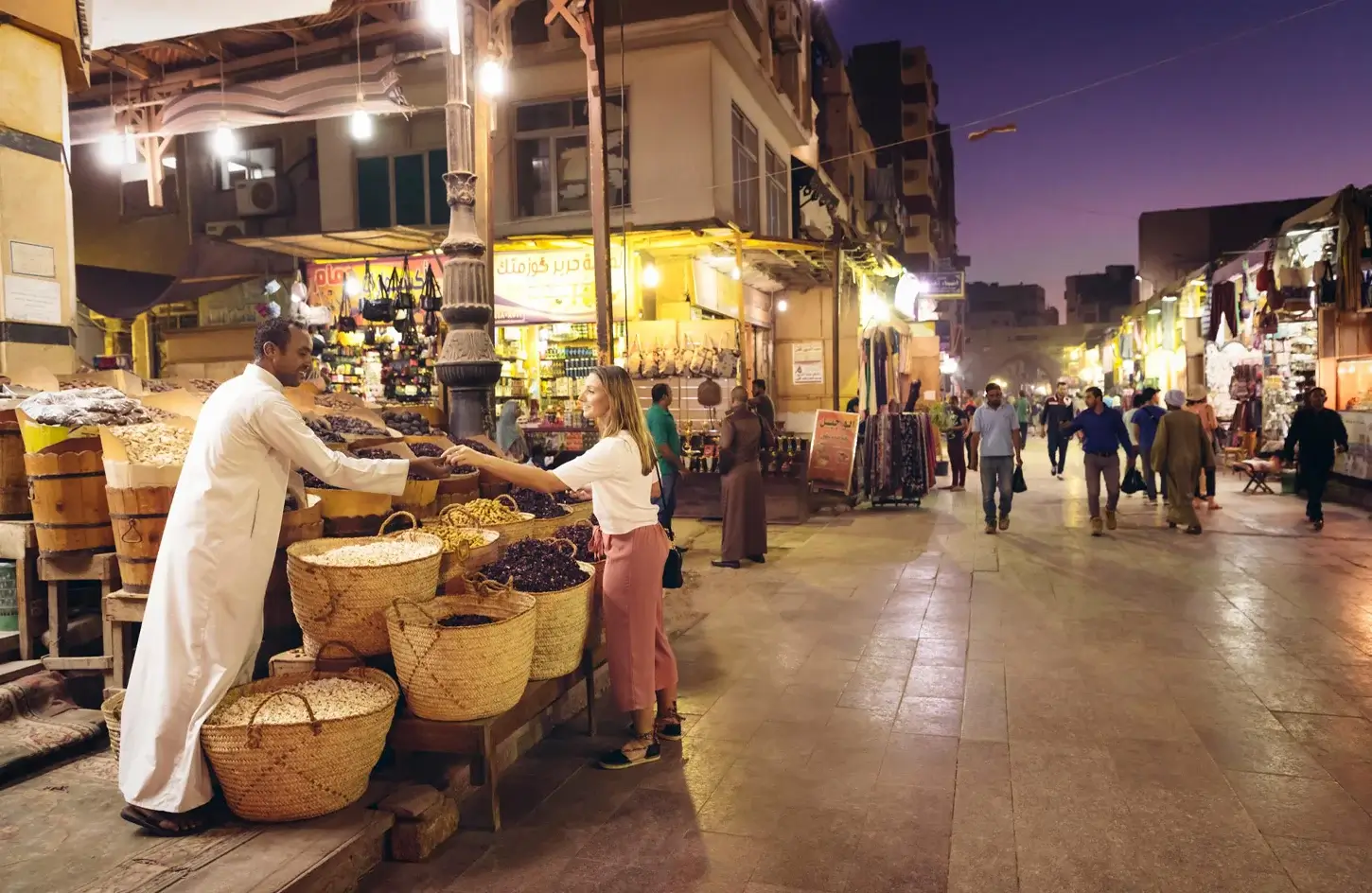
Scams and petty crime: what’s real and what’s just a hustle
These issues most often affect visitors. In Canada, pickpocketing and bag snatching are becoming more common, especially in tourist spots and on the metro. Violent crime against tourists is much less common than these day-to-day problems. The most common patterns are listed below.
| What you are told | What is really happening | What to do |
|---|---|---|
| “Come in, the pyramids are closed / the road is blocked, my cousin has a shop” | A detour to a papyrus, perfume or souvenir shop that pays the person a commission | Say “la, shukran” (no, thank you), keep walking and check opening hours on the official ticket office |
| “Free” camel, horse or photo help at Giza | The “gift” turns into a demand for money, often a large one | Politely refuse anything you did not ask for, and agree a price in writing before you get on an animal |
| Taxi without a meter | The price changes at the end | Use Uber or Careem, or fix the fare before you get in |
| A guide who approaches you outside a temple | May be unlicensed and unaccountable | Book in advance, or ask to see a Ministry of Tourism-issued guide license |
| A tour that is much cheaper than everyone else’s | Hidden extras, unlicensed operator, or no insurance | Ask for the operator’s ETAA license number and check it with ETAA |
How to verify an operator. Egyptian tour operators must have a license from the Egyptian Travel Agents Association (ETAA). We hold ETAA license No. 504, Category A, and we are happy to share this number so you can check it with ETAA before making any payment. If an operator cannot provide a license number, it is best to avoid them.
Harassment
According to Canadian advice, foreign women often experience unwanted attention such as staring, catcalls, and sometimes touching, especially during public holidays. Usually, this is just a nuisance, but it can sometimes be more serious. See our section for women travelers below for practical tips.
Roads and traffic
Cairo traffic is very heavy, and Canada rates road safety as poor. Avoid microbuses and use trusted transport providers. Don’t rent a car to drive yourself unless you know the local conditions well. The simplest solution is to arrange a private driver through your hotel or tour operator.
Health, water, and Ebola
- Water and food. Use bottled or filtered water, even when brushing your teeth. Inexpensive places may not have safe salads or ice, so it’s best to avoid them. Most visitors experience stomach upsets.
- Vaccinations. Most visitors don’t need any required vaccines, but it’s a good idea to check with a travel clinic about hepatitis A, typhoid, and polio before your trip. The US advisory also mentions polio.
- Malaria. In 2024, the WHO declared Egypt malaria-free.
- Ebola. In May 2026, Egypt’s Health Ministry reported no Ebola cases. Canada’s travel advice mentions possible entry restrictions and health screening because of outbreaks in other parts of Africa. Check the latest rules for your flight.
- Medical care. According to Canada, medical facilities in Egypt are not up to Canadian standards. Make sure your travel insurance includes medical evacuation.
6Is Egypt safe for solo women, Americans, families, and LGBTQ+ travelers?
Solo women
Yes, it is possible with some preparation, but you should know that you will stand out. Cover your shoulders and knees, bring a light scarf for mosques, and be ready for staring or comments—it’s best to ignore them. The Cairo Metro offers women-only carriages. After dark, choose Uber, Careem, or a driver arranged by your hotel instead of street taxis. If someone touches you, speak up loudly in public and report it to the Tourist Police at 126. Joining group tours or hiring a private guide can make your first trip much smoother.
Americans
The US travel advisory is Level 2 (increased caution), except for the Sinai and certain border areas, which are Level 4. Sign up for the Smart Traveler Enrollment Program (STEP). Keep in mind that Egyptian law considers dual US-Egyptian citizens as only Egyptian, so the US Embassy has limited ability to help if dual nationals are arrested or detained.
Families with children
Staying at a Red Sea resort or taking a Nile cruise with a private guide are the easiest ways to visit Egypt with children, since transport, meals, and security are taken care of. The main risks for kids are heat, stomach upsets, and traffic, so plan sightseeing for early mornings and use a private car with seat belts.
LGBTQ+ travellers
According to Canadian advice, same-sex relationships are not criminalized in Egypt, but discrimination and arrests can still happen, including through dating apps. Be discreet in public and avoid meeting strangers from apps.
7Are Nile cruises, the pyramids, and day trips safe?
Nile cruises. Luxor, Aswan, and Abu Simbel are all outside the UK’s regional warnings, and cruises follow a set route between them. This makes cruising one of the easier ways to see the country. We offer Luxor–Aswan cruises, dahabiya sailings and Lake Nasser cruises. Choose a boat from a licensed operator, and check which excursions are included so you don’t have to haggle with touts at every stop.
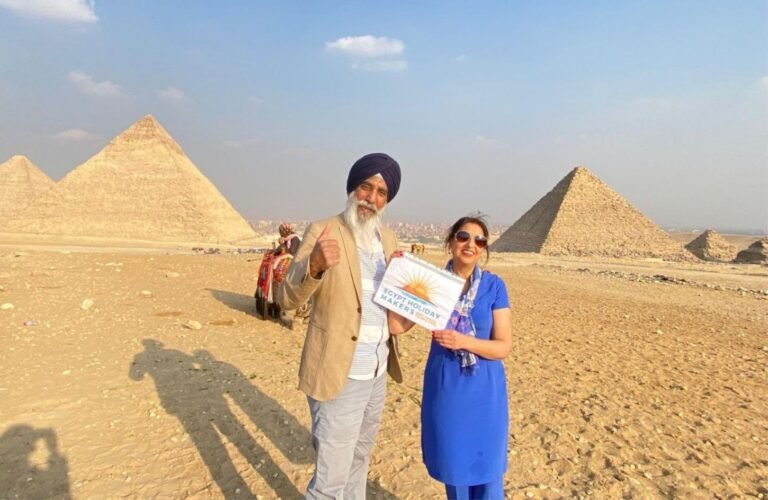
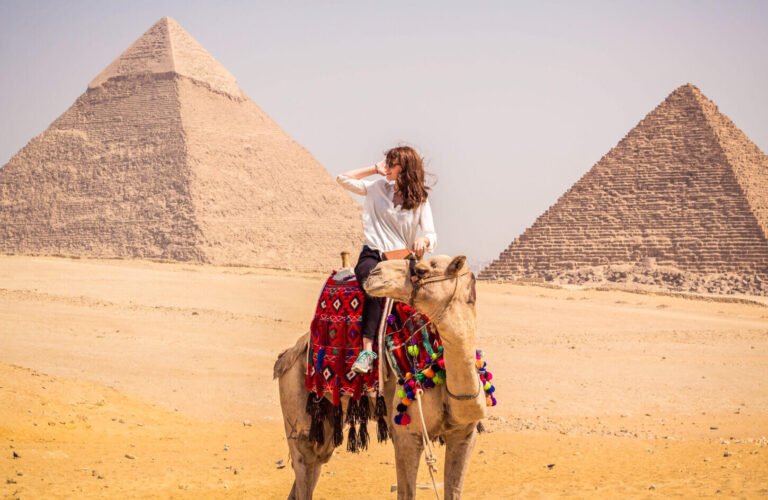
The pyramids and the Grand Egyptian Museum. Giza is safe, but you will likely face some hassle at the entrance. Buy tickets only at official ticket offices, agree on the price for a camel or horse ride before you get on, and politely turn down anyone offering to help with photos. Booking a private guide in advance is the easiest way to avoid these issues.
Day trips from Hurghada, Marsa Alam and Sharm El Sheikh. Resort trips to the Red Sea reefs, Luxor or Cairo are common, but the main risks come during long road transfers. Watch out for late-night driving, crowded minibusses, and unlicensed operators. Always book with a licensed operator and check if the driver and vehicle are insured.
8What does staying safe in Egypt cost, and which numbers should you save?
| Item | Detail | Check before you travel |
|---|---|---|
| Single-entry tourist visa | US$30 on arrival since 1 March 2026; US$30 for the single-entry e-visa since 27 April 2026; multiple-entry e-visa US$65 | A visa levy rise is scheduled from 1 January 2027, but the final visa price has not been announced. Confirm the fee on Egypt’s official e-visa portal before you book |
| Tourist Police | 126 | Save it in your phone before you fly |
| Police/ambulance | 122 / 123 | Some governments list 112 for police; save both |
| Embassy numbers | Canada: +20 2 2461-2200 (business hours) | Save your own embassy’s 24-hour line before you fly |
| Travel insurance | Medical cover with evacuation; check terrorism and civil-unrest exclusions | Ask your insurer in writing |
| Passport | At least six months’ validity | Confirm with your airline |
| Cash | Small notes (10, 20, 50 EGP) for tips | Cards work in hotels and larger restaurants; carry cash for markets and small sites |
9What is overrated or worth avoiding in Egypt?
Most visitor problems can be avoided. Here are some things we suggest skipping or approaching with extra care.
- Avoid going into the Western Desert on your own. You’ll need permits, an official guide, and a licensed operator. Phone service and medical help are also hard to find there.
- Avoid microbuses and unlicensed minibusses. Canada recommends avoiding them. Instead, use Uber, Careem, or book a driver through a licensed company.
- Don’t bring drones. Canada says they’re strictly banned, so it’s best to leave yours at home.
- Don’t take photos of bridges, canals, or government and military sites. It’s not allowed. If you’re unsure, always ask before taking a picture.
- Stay away from protests and big political gatherings. Unpermitted protests are illegal, and Canada warns that demonstrations can be especially risky for women. The safest option is to walk away.
- Don’t post anything critical about the government on social media. Canada says posts seen as critical of the government, security forces, or the President could be illegal. It’s best to avoid political comments online while you’re in Egypt.
- Only drink alcohol in licensed venues. Drinking in public is not allowed, and drug penalties are very strict.
- Be careful with the cheapest tours you find online. If a tour costs half as much as the others, it probably lacks something important like insurance, a license, or a safe vehicle.
10What should you do if something goes wrong in Egypt?
- If you experience theft, a scam, or harassment, call the Tourist Police at 126. For other emergencies, dial 122 for the police. Ask for a copy of any report you file, as your insurer will need it.
- If you need medical help, call 123 for an ambulance or go to a private hospital in Cairo, Luxor, or the Red Sea resorts. Keep your insurance policy number and emergency contact saved in your phone.
- If your passport is lost or stolen, or if you are detained, contact your embassy. It’s a good idea to keep a photo of your passport page in your email.
- Let your tour operator know right away. If you booked with us, message our team on WhatsApp at +20 115 296 5919, and we’ll help you reach the right people.
- Do not hand over money under pressure. Go to a hotel lobby, ticket office, or police post before you decide anything.
11Frequently asked questions about safety in Egypt
Is it safe to travel to Egypt right now?
Yes, the main tourist areas are considered safe. As of 27 October 2026, the US rates Egypt at Level 2 (exercise increased caution), Canada recommends a high degree of caution, and the UK only advises against travel to places like North Sinai and the Libyan border area. Cairo, Giza, Luxor, Aswan, and the Red Sea resorts are open and not included in the UK warnings. Always check your own government’s advice before you travel, as it can change.
Is Egypt safe to visit with the war in the Middle East?
The conflict has mostly affected flights, not daily life in Egypt’s tourist areas. As of March 2026, Egyptian airspace was open, and Cairo, Luxor, Aswan, Sharm El Sheikh, and Hurghada were open and considered safe. Airlines may reroute or cancel flights if neighboring airspace closes, so check your airline’s change policy and make sure your insurance covers travel disruptions. North Sinai, near the Gaza border, remains on all governments’ do-not-travel lists.
Which parts of Egypt should I avoid?
Avoid North Sinai; the area within 20 to 50 km of the Libyan border (depending on your government); the northern part of South Sinai beyond the St Catherine to Nuweiba road; and the Western Desert unless you are with a licensed operator and have the right permits. All the usual tourist spots, like Cairo, Luxor, Aswan, Abu Simbel, Hurghada, and Sharm El Sheikh, are outside the strictest warnings.
Is Egypt safe for solo female travelers?
Yes, with some preparation. The main issue is unwanted attention, like staring, catcalls, and sometimes touching. Canada notes this can increase on public holidays. Dress modestly, use Uber, Careem, or a hotel-arranged driver after dark, and use the women-only carriages on the Cairo Metro. If anything happens, report it to the Tourist Police at 126. A guided tour on your first trip can help you avoid problems.
Is Egypt safe for Americans?
Yes. The State Department rates Egypt as Level 2, meaning “exercise increased caution” due to terrorism, crime, and health risks. Level 4 applies only to North and Middle Sinai and the border areas. Americans should enroll in STEP, get insurance that includes medical evacuation, and remember that Egyptian law treats dual US-Egyptian citizens as Egyptian, which limits what the embassy can do.
Are Nile cruises and the pyramids safe?
Yes. Luxor, Aswan, Abu Simbel, and Giza aren’t included in the UK’s regional warnings, and Nile cruises follow a set route. The main risk is unofficial guides, paid “photo help,” and animal rides that may end with demands for extra money. Buy tickets only at official offices, agree on prices before you start, and consider booking a guide in advance.
12A final note from the Egypt Holiday Makers team
We live and work in Egypt, and we wouldn’t offer tours here if we thought it was unsafe. Still, we won’t pretend there’s no risk. Here’s our honest advice: stick to main routes, use licensed guides, keep your bag in front of you, and treat travel advisories as a checklist, not a final answer. If you’d like a second opinion on your plans, or want a trip focused on the places we know best, message us on WhatsApp at +20 115 296 5919 or share your dates and we’ll send you a plan.
Last checked on 27 October 2026. Government advice can change, so please double-check the official pages below before you travel.
Ready to plan your Egypt trip? Let's find your perfect dates.
A local expert replies within hours with a tailor-made itinerary and honest advice.