How Wide Is the Red Sea? Full Dimensions & Key Facts
How wide is the Red Sea? It spans 355 km (220 miles) at its widest point, narrows to just 26 km (16 miles) near the Bab el-Mandeb Strait, stretches 2,250 km (1,400 miles) in length, and plunges to a maximum depth of 3,040 meters (9,970 feet) in its central rift zone. It covers a surface area of roughly 438,000 km² and holds an average depth of 490 meters.
Those numbers alone make it one of the most geographically remarkable bodies of water on Earth — but the Red Sea is far more than its dimensions. It sits at the crossroads of three continents, has shaped human history for over 4,000 years, supports one of the most biodiverse marine ecosystems in the world, and is still geologically alive, widening by measurable amounts every year.
This guide covers everything: the full dimensions of the Red Sea, why it carries its unusual name, its role in global trade, its underwater world, and what makes it one of the top travel destinations on the planet. If you are planning a trip to Egypt’s Red Sea coast, you will find practical information here too.
122 Facts About the Red Sea
1. Red Sea Dimensions at a Glance
| Feature | Measurement |
|---|---|
| Maximum Width | 355 km (220 miles) |
| Minimum Width | 26 km (16 miles) — Bab el-Mandeb Strait |
| Total Length | 2,250 km (1,400 miles) |
| Average Depth | 490 m (1,608 ft) |
| Maximum Depth | 3,040 m (9,970 ft) — Central Rift Zone |
| Surface Area | 438,000 km² (169,000 sq miles) |
| Average Salinity | 4.1% (global average is 3.5%) |
| Water Temperature | 20°C – 30°C (68°F – 86°F) year-round |
| Number of Fish Species | 1,200+ (20% found nowhere else on Earth) |
| Coral Species | 200+ types of hard and soft coral |
2. How Long Is the Red Sea?
The Red Sea is remarkably long, stretching approximately 2,250 kilometers (1,400 miles) from the Suez Canal in the north to the Bab el-Mandeb Strait in the south. Its length makes it one of the longest enclosed seas in the world.
3. How Deep Is the Red Sea?
The Red Sea is incredibly deep. On average, it measures 490 meters (1,608 feet) in depth. However, its deepest point is found in the central rift zone, plunging to a staggering 3,040 meters (9,970 feet). This depth is a testament to the Red Sea’s tectonic origins.
4. A Sea That’s Growing Wider
The Red Sea isn’t static—it’s growing! Situated over a tectonic rift, the African and Arabian plates are moving apart, causing the Red Sea to widen by about 1 centimeter (0.4 inches) per year. Over millions of years, it could become an ocean.
5. Crystal-Clear Waters
The Red Sea is famous for its pristine clarity, thanks to minimal rainfall, high salinity, and limited river inflow. Its waters are so clear that snorkelers and divers can enjoy visibility of up to 30 meters (98 feet) in some areas.
6. A Biodiversity Hotspot
The Red Sea is home to over 1,200 species of fish, and 20% of them can’t be found anywhere else on Earth. It also boasts over 200 types of coral, creating vibrant underwater landscapes that are a haven for marine life.
7. Why Is It Called the Red Sea?
The name “Red Sea” is one of geography’s most debated questions, with no single agreed-upon answer. Here are the most widely accepted theories.
The Greek origin — Erythra Thalassa: The oldest written record comes from ancient Greece. The Greeks called it Erythra Thalassa — “Red Sea” — later translated into Latin as Mare Rubrum and eventually into English. The historian Herodotus used the name in the 5th century BCE, occasionally interchanging it with “Southern Sea,” suggesting the color may have carried a directional meaning as much as a literal one.
The algae theory: Seasonal blooms of the cyanobacterium Trichodesmium erythraeum turn the normally vivid blue-green water a reddish-brown color when the organisms die near the surface — a phenomenon still visible today from Egypt’s Red Sea coastline, from Hurghada down to Marsa Alam.
The red mountains theory: Along Egypt’s Eastern Desert coast, the mountains are composed of red granite and iron-rich rock that glows a deep reddish hue in sunlight. Ancient sailors hugging the Egyptian shoreline would have seen this dramatic landscape dominating the horizon, and many historians believe the sea simply took its name from the land that surrounded it.
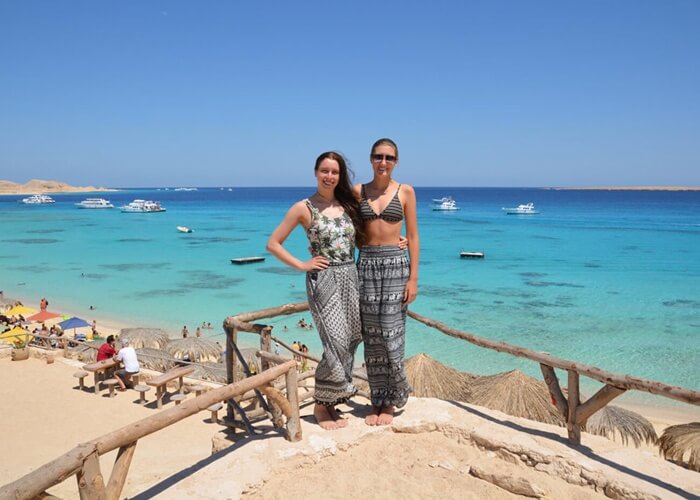
Whatever its origin, the name has drawn travelers to Egypt’s Red Sea coast for centuries — and the turquoise waters, coral reefs, and desert mountains that greet visitors today make it easy to understand why the sea has captured human imagination for so long.
8. A Historical Trade Route
The Red Sea has been one of the world’s most important maritime corridors for over 4,000 years. As far back as 2500 BCE, Egyptian pharaohs sent expeditions southward, returning with frankincense, myrrh, and gold. Queen Hatshepsut’s famous expedition around 1500 BCE is depicted on the walls of her temple at Deir el-Bahari in Luxor — one of the most remarkable records of ancient trade in existence. The Romans, Arabs, and Ottomans each recognized the sea’s value in turn, and it remained the backbone of commerce between Africa, Arabia, and Asia for millennia.
Today, the Red Sea accounts for approximately 12–15% of global maritime trade by volume, making it one of the busiest and most strategically significant waterways on Earth.
9. How Wide Is the Red Sea in Relation to Trade?
The Red Sea’s varying width has always shaped how nations have used it. At its narrowest point — the Bab el-Mandeb Strait at just 26 kilometers wide — it becomes a critical chokepoint that around 12% of international maritime traffic passes through every year. This narrow passage between Yemen and Djibouti is one of the most closely monitored maritime corridors in the world, and its stability directly affects global shipping, oil transport, and trade between Europe and Asia.
10. The Suez Canal — Egypt’s Gift to Global Trade
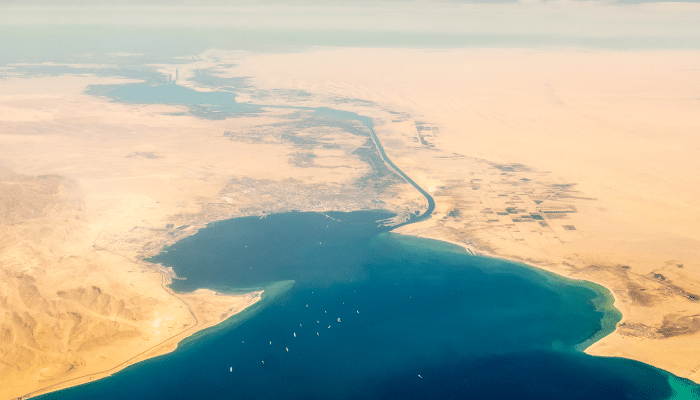
The Suez Canal connects the Red Sea to the Mediterranean through 193 kilometers of Egyptian desert, cutting roughly 7,000 kilometers off the voyage between Europe and Asia. The idea stretches back to the pharaohs — early waterway attempts linking the Nile to the Red Sea date to around 1850 BCE — but the modern canal, built under Ferdinand de Lesseps, opened on November 17, 1869, and transformed global shipping permanently.
Today, it handles around 19,000 ships per year and was expanded in 2015 to allow two-way traffic. For visitors to Egypt, watching a supertanker pass silently through the desert from Port Said or Suez City is one of the country’s most quietly spectacular sights — and a reminder that Egypt’s connection to the sea has never really stopped shaping the world.
11. One of the Saltiest Seas
The Red Sea is among the saltiest seas in the world, with a salinity level of around 4.1%, compared to the global average of 3.5%. This high salinity is due to its high evaporation rate and minimal freshwater inflow.
12. A Warm-Water Wonder
The Red Sea’s waters are consistently warm, with temperatures ranging from 20°C (68°F) in winter to 30°C (86°F) in summer. This makes it an ideal year-round destination for beachgoers and water sports enthusiasts.
13. Red Sea Riviera: A Tourist Paradise
The Red Sea is a hub for luxury tourism, offering world-class resorts and activities. Destinations like Sharm El-Sheikh, Hurghada, and El Gouna attract millions of visitors annually, drawn by the sea’s beauty and recreational opportunities.
14. A Diver’s Dream Destination
The Red Sea is one of the best diving locations in the world. With incredible coral reefs, diverse marine life, and famous sites like the Blue Hole and the SS Thistlegorm Wreck, it’s a bucket-list destination for scuba enthusiasts.
15. Unique Marine Species
The Red Sea is home to fascinating marine creatures, including dugongs, whale sharks, and endemic fish species. Its unique ecosystems make it a critical area for marine conservation.
16. Volcanic Islands and Geological Wonders
The Red Sea is dotted with volcanic islands, such as the Hanish Islands and Jabal al-Tair. These islands, formed by underwater volcanic activity, highlight the region’s dynamic geology.
17. Religious and Mythological Significance
The Red Sea holds significant religious and mythological importance. In the Bible, it is famously described as the site where Moses parted the waters to lead the Israelites out of Egypt.
18. Underwater Hot Springs
Beneath the Red Sea, there are underwater hot springs that release mineral-rich waters. These springs support unique ecosystems that thrive in extreme conditions.
19. Migratory Bird Haven
The Red Sea region serves as a vital stopover for millions of migratory birds traveling between Europe, Asia, and Africa. Birdwatchers flock to its shores to observe species like flamingos, storks, and ospreys.
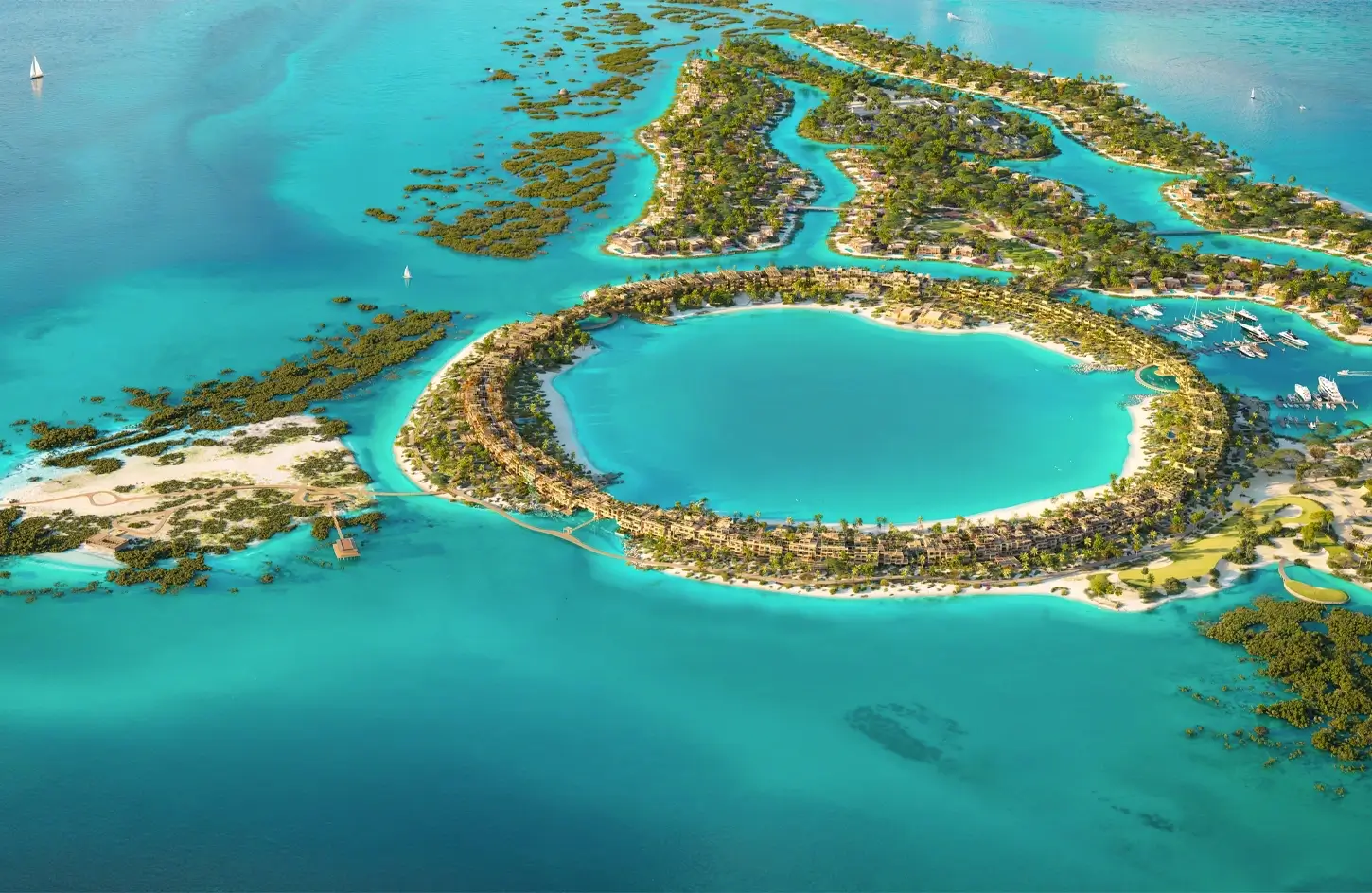
20. The Future of Red Sea Tourism
Massive developments like Saudi Arabia’s NEOM and the Red Sea Project aim to transform the region into a sustainable luxury tourism hub. These initiatives promise eco-friendly resorts and unique experiences for visitors.
21. Strategic and Economic Importance
The Red Sea’s location between continents makes it a critical route for global trade and energy transport. Its significance will only grow as international shipping demands increase.
22. A Natural Marvel Worth Exploring
From its narrow stretches to its vast, open waters, the Red Sea is a living, breathing natural wonder. Its incredible biodiversity, geological features, and historical importance make it a destination like no other.
2Best Time to Visit the Red Sea
The Red Sea can be visited year-round, but the experience varies by season.
- October to April — Peak Season: The best window for most visitors. Temperatures sit between 20°C and 28°C, the sea is calm, and underwater visibility is at its clearest. December and January are the coolest months — ideal for active travelers.
- May to September — Summer: Daytime heat regularly reaches 35°C–40°C, but the sea is warm and calm, marine life activity is at its peak, and hotels offer their most competitive rates. A great option for divers and budget-conscious travelers who can handle the heat.
There is rarely a bad time to visit the Red Sea — it is simply a matter of matching the season to your travel style.
3Red Sea vs Dead Sea — What Is the Difference?
Many travelers wonder how the two compare. They are entirely different bodies of water.
| Feature | Red Sea | Dead Sea |
|---|---|---|
| Type | Sea (inlet of the Indian Ocean) | Landlocked salt lake |
| Length | 2,250 km | 50 km |
| Maximum Depth | 3,040 m | 306 m |
| Salinity | ~4.1% | ~34% — 10× saltier than the ocean |
| Marine Life | 1,200+ fish species, 200+ corals | None — no fish or coral can survive |
| Swimming | Excellent for swimming and diving | You float effortlessly but cannot swim conventionally |
| Primary Appeal | Diving, snorkeling, beach holidays | Therapeutic floating, mineral mud treatments |
The Red Sea is a living, thriving marine ecosystem. The Dead Sea is the opposite — so saturated with salt that no complex life can survive, which is exactly where its name comes from. If you are visiting Egypt, the Red Sea is easily accessible from Cairo and sits at the heart of most Egyptian holiday itineraries.
4Red Sea Safety for Swimmers and Divers
The Red Sea is one of the world’s safest destinations for water activities, but a few basics are worth knowing before you get in.
- Swimming: The Egyptian coast is calm year-round with minimal wave action. Currents can be unpredictable near reef edges and bay mouths, so always swim within your resort’s designated areas.
- Reefs: Egypt’s reefs are protected ecosystems. Do not touch or stand on coral, and use reef-safe sunscreen.
- Marine life: The vast majority of Red Sea species are non-aggressive. Be cautious of lionfish and stonefish resting on the seafloor, sea urchins in shallow areas, and seasonal jellyfish in late summer.
- Diving: The Red Sea suits all levels, from first-time snorkelers to technical divers. Hurghada and Sharm El Sheikh offer excellent PADI courses in ideal conditions. Sites like the Blue Hole at Dahab and the Brothers Islands require proper certification and an experienced local guide.
If you are planning a Red Sea trip as part of your Egypt holiday, our Hurghada day tours, Sharm El Sheikh excursions, and Marsa Alam tours include guided experiences led by certified local experts.
5Final Thoughts
The Red Sea is a place of endless fascination. Its width, varying from 26 kilometers to 355 kilometers, depth of 3,040 meters, and length of 2,250 kilometers are just the beginning of its story. Whether you’re asking how wide the Red Sea is, marveling at its vibrant marine life, or planning a luxury vacation along its shores, this unique body of water promises unforgettable experiences.
6FAQs About the Red Sea: Easy-to-Read Answers
Here are some commonly asked questions about the Red Sea, packed with fascinating facts to enhance your knowledge.
What Are 5 Facts About the Red Sea?
-
- The Red Sea is one of the saltiest bodies of water, with a salinity of about 4.1%.
- It’s home to over 1,200 species of fish, 20% of which are found nowhere else on Earth.
- The Red Sea stretches 2,250 kilometers (1,400 miles) in length.
- It’s widening by about 1 centimeter per year due to tectonic activity.
- The Red Sea is famous for its clear, warm waters, making it a top destination for snorkeling and diving.
7How Old Is the Red Sea?
The Red Sea is estimated to be about 25–30 million years old, formed as the African and Arabian tectonic plates started to drift apart.
What Is the Red Sea Best Known For?
The Red Sea is best known for:
-
-
- It’s vibrant coral reefs that stretch over 2,000 kilometers.
- Warm, crystal-clear waters are ideal for diving and snorkeling.
- It has historical significance as a vital trade route.
-
10 Interesting Facts About the Red Sea
-
-
- It’s one of the warmest seas, with temperatures ranging from 20°C to 30°C (68°F to 86°F).
- The Red Sea has no major rivers flowing into it, keeping its waters clear.
- It’s connected to the Mediterranean Sea by the Suez Canal.
- The Red Sea is expanding due to tectonic plate movements.
- It has underwater hot springs rich in minerals.
- The Red Sea’s coral reefs are over 5,000 years old.
- The name “Red Sea” might come from seasonal red algae blooms.
- It’s a key migration route for birds between Europe, Asia, and Africa.
- Its location made it pivotal for ancient trade routes.
- The Red Sea features volcanic islands formed by tectonic activity.
-
Facts About the Red Sea for Kids
-
-
- The Red Sea is named after red-colored algae that sometimes grow in its waters.
- It’s so salty that people can float easily in it!
- The sea is home to colorful fish like clownfish and parrotfish.
- It’s between two continents: Africa and Asia.
- People have been sailing on the Red Sea for thousands of years.
-
Where Is the Red Sea Located, and in Which Country?
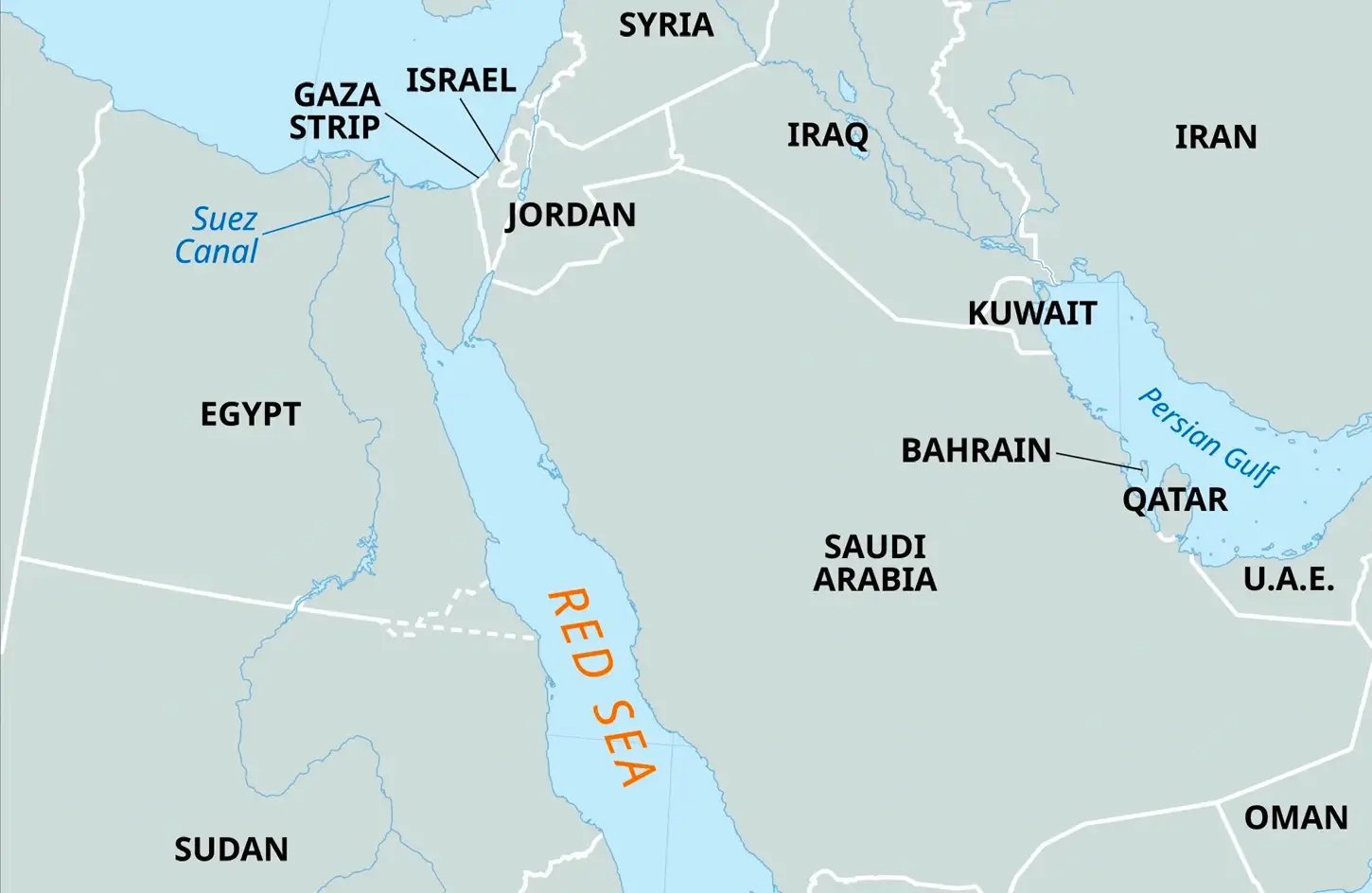
The Red Sea lies between Africa and the Arabian Peninsula, bordered by countries like Egypt, Sudan, Eritrea, Djibouti, Saudi Arabia, and Yemen.
Where Did Moses Cross the Red Sea?
According to biblical tradition, Moses and the Israelites crossed the Red Sea during the Exodus. Scholars debate the exact location, but it is often associated with the northern parts of the Red Sea or nearby bodies of water.
Red Sea Map
The Red Sea stretches from the Suez Canal in Egypt to the Bab el-Mandeb Strait near Yemen and Djibouti, connecting to the Gulf of Aden and the Arabian Sea.
What Is the Narrowest Width of the Red Sea?
The narrowest point of the Red Sea is at the Bab el-Mandeb Strait, where it’s just 26 kilometers (16 miles) wide.
Can You Swim in the Red Sea?
Yes, you can swim in the Red Sea! Its warm waters, high salinity, and calm conditions make it a favorite for swimmers and snorkelers. The rich marine life adds to the experience.
Ready to plan your Egypt trip? Let's find your perfect dates.
A local expert replies within hours with a tailor-made itinerary and honest advice.