
Have you ever wondered what makes Traditional Egyptian Food so unforgettable—comforting yet bold, ancient yet alive on every street corner? Egyptian cuisine is shaped by thousands of years of history, the fertile Nile Valley, and deeply rooted Egyptian food traditions that turn simple ingredients into soulful meals. Below is the ultimate, competitor-beating guide, presented as a structured, numbered list of Egyptian traditional dishes every traveler and food lover should know—covering breakfast, street food, mains, desserts, and drinks.
What Defines Traditional Egyptian Food?
At its heart, Traditional Egyptian Food is built on simplicity, balance, and seasonality. Most Egyptian traditional food relies on affordable, locally grown ingredients such as legumes, grains, vegetables, herbs, and slow-cooked meats—making the cuisine both nourishing and accessible. Meals are often shared, reinforcing the strong sense of family and hospitality that defines Egyptian culture.
One of the most distinctive elements of Egyptian food traditions is how dishes are tied to daily routines and religious celebrations. A traditional Egyptian breakfast like ful medames or ta‘ameya is light yet filling, while heartier meals are enjoyed later in the day. During Ramadan, certain foods and drinks take center stage, and festive dishes like fatta appear during major holidays.
Regional diversity also plays a key role in shaping Egyptian cuisine. Coastal cities such as Alexandria favor seafood and Mediterranean flavors, Upper Egypt is known for spiced meats and rich stews, and rural villages along the Nile preserve recipes passed down for generations.
Top Egyptian Traditional Dishes
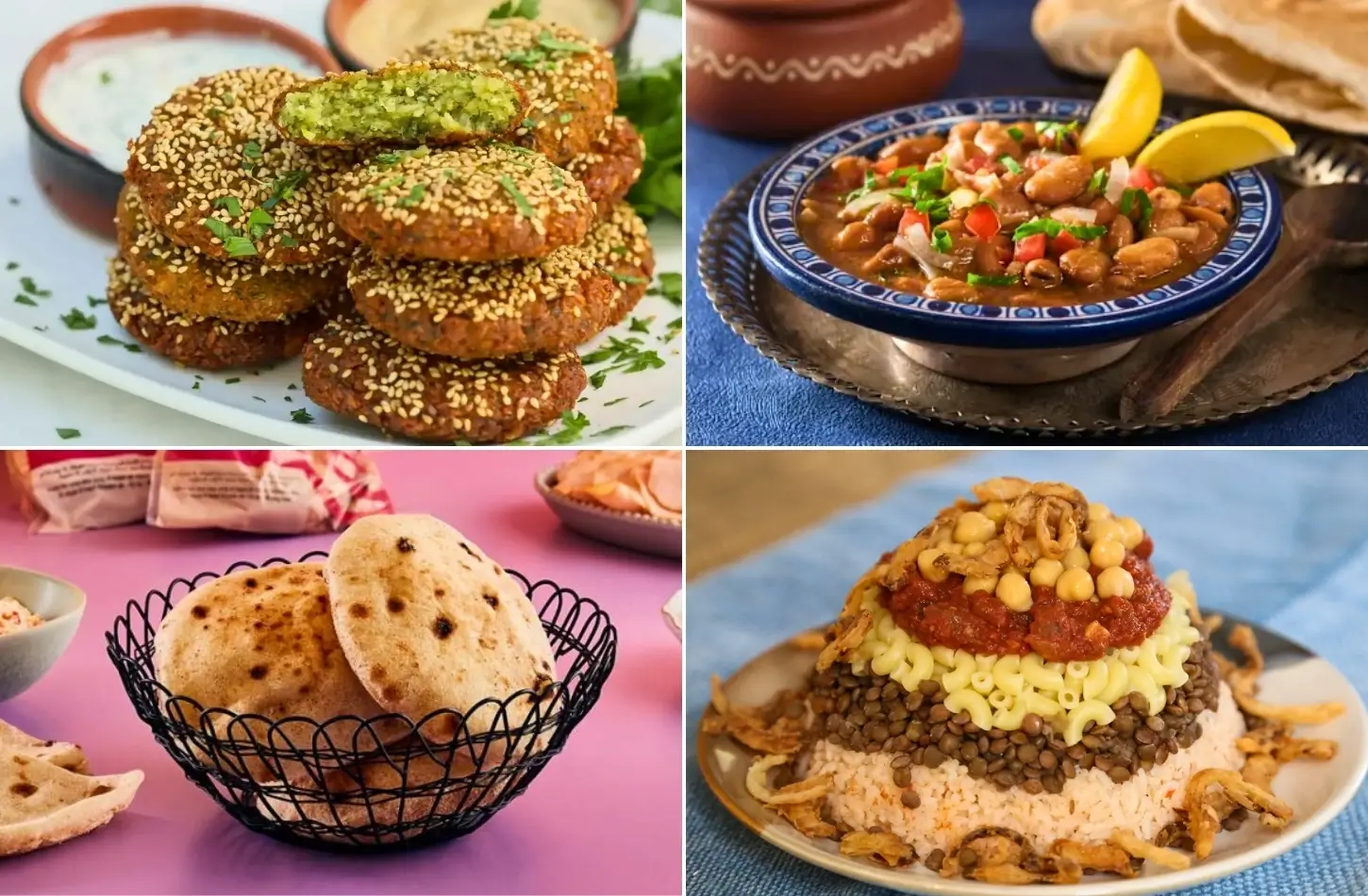
1. Koshari
- Taste & Ingredients: A hearty mix of rice, lentils, pasta, chickpeas, crispy onions, tomato sauce, and spicy garlic vinegar.
- Cultural Background: The national comfort food and a pillar of Egyptian traditional food, born in 19th-century Cairo as a working-class meal.
- Where to Eat: Cairo’s downtown koshari shops or Alexandria’s local eateries.
- Traveler Tips: 100% vegetarian, ultra-budget-friendly, ask for “extra da’ah” (garlic sauce).
- Fun Fact: Every Egyptian has a “favorite koshari place”—loyalty runs deep.
2. Ful Medames
- Taste & Ingredients: Slow-cooked fava beans with olive oil, lemon, cumin, and garlic.
- Cultural Background: The foundation of the traditional Egyptian breakfast has been eaten daily across Egypt for centuries.
- Where to Eat: Breakfast cafés in Cairo, Giza, and Luxor.
- Traveler Tips: Vegan by default; customize with eggs or tahini.
- Fun Fact: Street vendors often cook ful overnight in buried pots.
3. Ta‘ameya (Egyptian Falafel)
- Taste & Ingredients: Crispy fritters made from fava beans, herbs, and spices.
- Cultural Background: A uniquely Egyptian twist on falafel, deeply tied to Egyptian cuisine.
- Where to Eat: Street stalls nationwide; best fresh at breakfast.
- Traveler Tips: Green inside = fresh herbs; perfect for vegetarians.
- Fun Fact: The green color surprises many first-time visitors.
4. Baladi Bread (Aish Baladi)
- Taste & Texture: Whole-wheat, soft, slightly chewy flatbread.
- Cultural Background: “Aish” means life—bread is sacred in Egyptian food traditions.
- Where to Eat: Everywhere. Bakeries, homes, restaurants.
- Traveler Tips: Used as a utensil—tear, scoop, enjoy.
- Fun Fact: Subsidized bread has social and political importance.
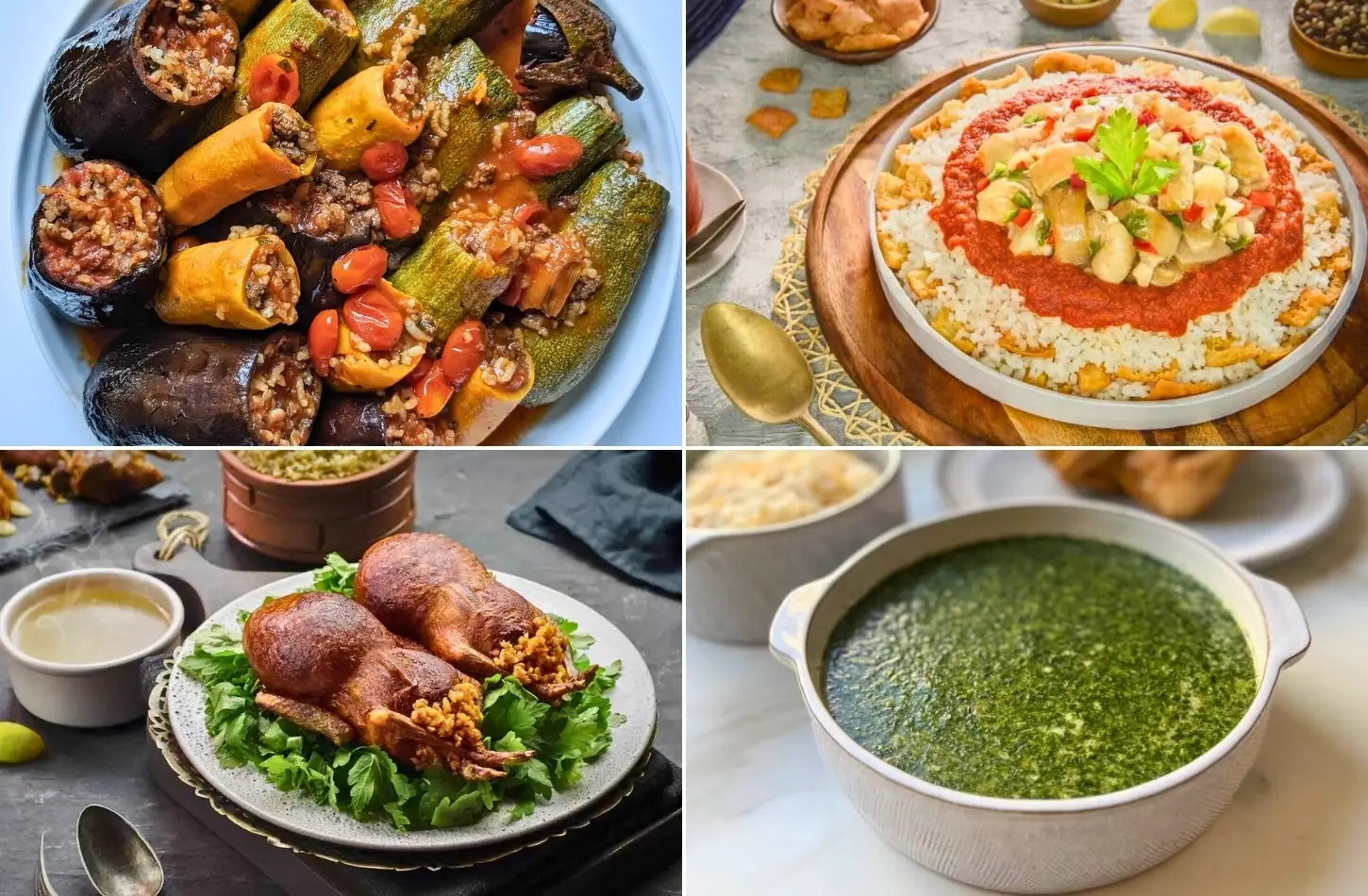
5. Molokhia
- Taste & Ingredients: Silky green soup flavored with garlic and coriander.
- Cultural Background: A dish with royal roots dating back to ancient Egypt.
- Where to Eat: Home-style restaurants in Cairo or Upper Egypt.
- Traveler Tips: Ask about texture—some like it thick, others soupy.
- Fun Fact: Egyptians argue passionately over the “correct” consistency.
6. Mahshi
- Taste & Ingredients: Vegetables stuffed with rice, herbs, tomato, and spices.
- Cultural Background: A celebratory dish common at family gatherings.
- Where to Eat: Traditional restaurants nationwide.
- Traveler Tips: Vegetarian; order mixed mahshi for variety.
- Fun Fact: Each family guards its own recipe.
7. Hamam Mahshi (Stuffed Pigeon)
- Taste & Ingredients: Tender pigeon stuffed with spiced rice or freekeh.
- Cultural Background: A luxury dish within famous Egyptian dishes, served on special occasions.
- Where to Eat: Rural Nile Valley restaurants.
- Traveler Tips: Ask if it’s grilled or roasted; rich but small.
- Fun Fact: Considered a symbol of hospitality.
8. Fatta
- Taste & Ingredients: Rice, crispy bread, garlic vinegar sauce, and meat.
- Cultural Background: Linked to religious feasts like Eid.
- Where to Eat: Cairo during holidays or celebratory meals.
- Traveler Tips: Heavy but iconic—best shared.
- Fun Fact: Garlic vinegar sauce defines its identity.
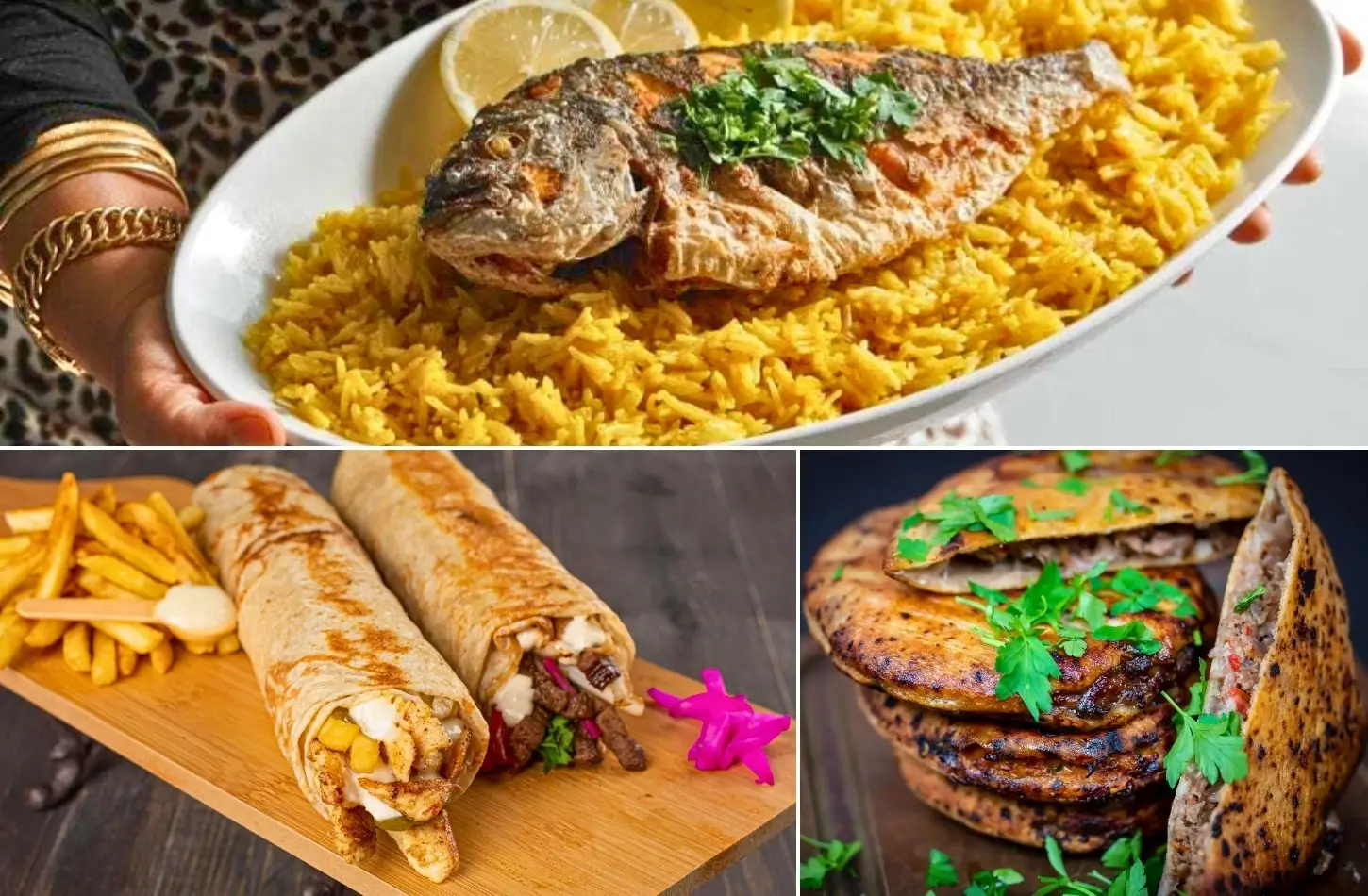
9. Hawawshi
- Taste & Ingredients: Spiced minced meat baked inside baladi bread.
- Cultural Background: A beloved Egyptian street food classic.
- Where to Eat: Local bakeries, Cairo suburbs.
- Traveler Tips: Eat hot; ask for tahini sauce.
- Fun Fact: Often compared to a Middle Eastern meat pie.
10. Shawarma (Egyptian Style)
- Taste & Ingredients: Thinly sliced marinated meat, less spiced than Levantine versions.
- Cultural Background: Adopted and localized within Egyptian cuisine.
- Where to Eat: Alexandria and Cairo street shops.
- Traveler Tips: Chicken is lighter; ask for extra garlic sauce.
- Fun Fact: Alexandria favors seafood shawarma variations.
11. Sayadeya (Fisherman’s Rice)
- Taste & Ingredients: Fish with spiced brown rice and caramelized onions.
- Cultural Background: Coastal specialty reflecting Mediterranean influence.
- Where to Eat: Alexandria, Port Said.
- Traveler Tips: Ask which fish is used daily.
- Fun Fact: Name means “fisherman’s style.”
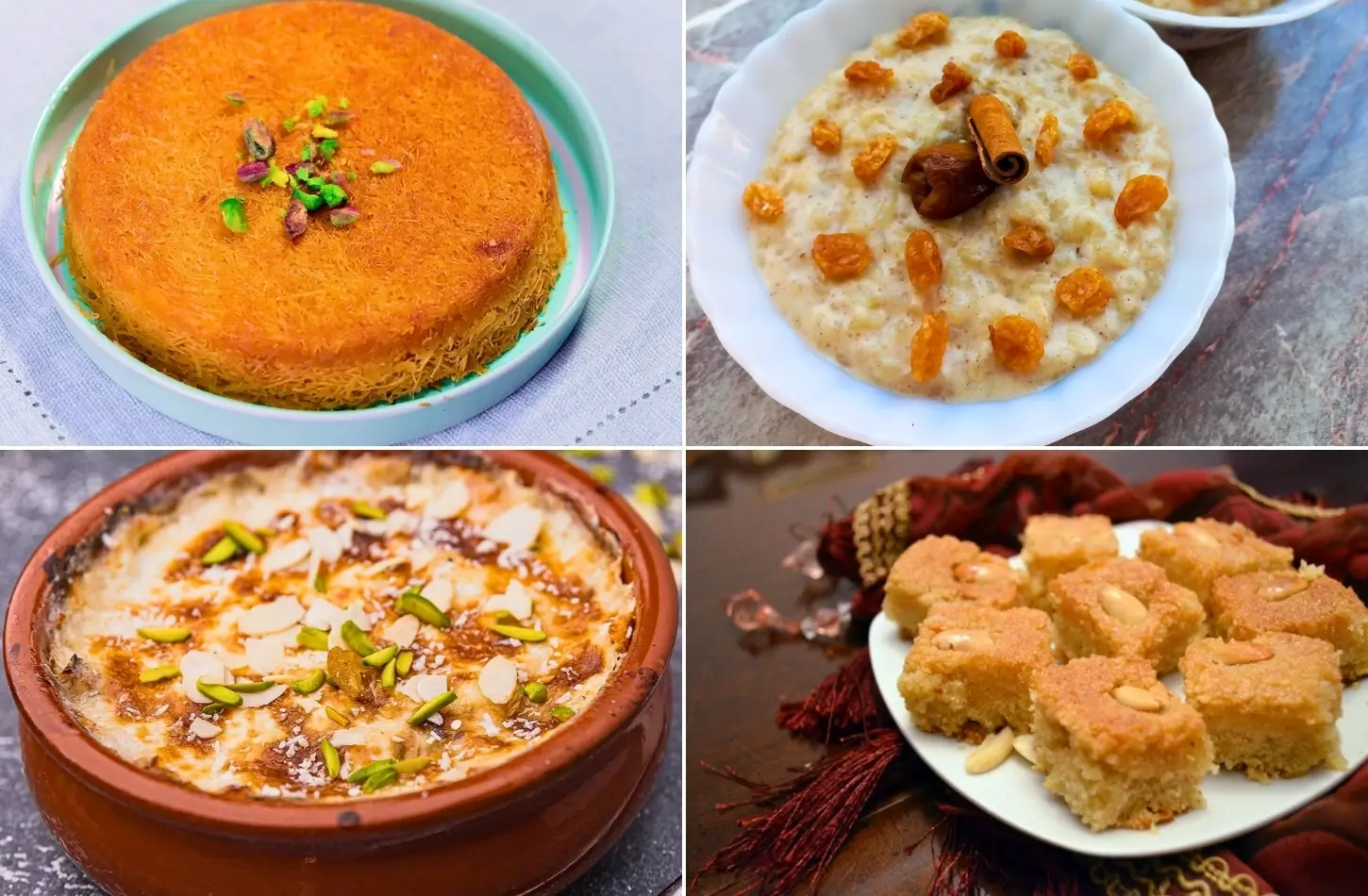
12. Basbousa
- Taste & Ingredients: Semolina cake soaked in sugar syrup.
- Cultural Background: A classic traditional Egyptian dessert served at celebrations.
- Where to Eat: Pastry shops nationwide.
- Traveler Tips: Coconut versions are common.
- Fun Fact: Best eaten fresh and warm.
13. Konafa
- Taste & Ingredients: Shredded pastry with cream or nuts, soaked in syrup.
- Cultural Background: Ramadan favorite across Egypt.
- Where to Eat: Cairo bakeries during Ramadan.
- Traveler Tips: Try mango konafa in summer.
- Fun Fact: Seasonal flavors rotate yearly.
14. Umm Ali
- Taste & Ingredients: Bread pudding with milk, nuts, and raisins.
- Cultural Background: Linked to medieval Egyptian history.
- Where to Eat: Traditional restaurants.
- Traveler Tips: Rich—ideal for sharing.
- Fun Fact: Named after a royal household legend.
15. Sahlab
- Taste & Ingredients: Warm, thick milk drink with coconut and nuts.
- Cultural Background: Winter comfort drink tied to street culture.
- Where to Eat: Street vendors on cold evenings.
- Traveler Tips: Ask for cinnamon topping.
- Fun Fact: Made from orchid root powder traditionally.
16. Karkade
- Taste & Ingredients: Tart hibiscus tea, served hot or cold.
- Cultural Background: Common at weddings and daily meals.
- Where to Eat: Cafés and homes.
- Traveler Tips: Unsweetened is very sour—ask first.
- Fun Fact: Known for its cooling properties.
17. Roz Bel Laban
- Taste & Ingredients: Creamy rice pudding with vanilla.
- Cultural Background: Everyday dessert in Egyptian traditional food culture.
- Where to Eat: Dairy shops and homes.
- Traveler Tips: Add cinnamon or nuts.
- Fun Fact: Often sold in takeaway cups.
18. Qamar El-Din
- Taste & Ingredients: Sweet apricot drink.
- Cultural Background: Essential Ramadan beverage.
- Where to Eat: Homes, Ramadan tents.
- Traveler Tips: Diluted versions are lighter.
- Fun Fact: Made from dried apricot sheets.
Conclusion
Exploring Traditional Egyptian Food is more than just tasting dishes—it’s stepping into centuries of culture, history, and daily life along the Nile. From a hearty ful medames breakfast in Cairo to the sweet indulgence of Umm Ali, every dish tells a story and reflects deep Egyptian food traditions.
Whether you’re wandering bustling street markets, enjoying a meal at a local café, or sharing a festive dish like fatta with new friends, the flavors, aromas, and textures of Egyptian cuisine are unforgettable. Each region offers its own specialties—from coastal seafood in Alexandria to spiced meat dishes in Upper Egypt—giving travelers endless opportunities to explore authentic tastes.
By following this guide, you’ll not only discover famous Egyptian dishes but also uncover hidden culinary gems, learn about cultural rituals, and gain practical tips for eating like a local. Whether you’re seeking budget-friendly street food, a rich family-style meal, or a sweet traditional Egyptian dessert, this journey through Egypt’s cuisine will leave a lasting impression and inspire your next adventure.