
25 Egyptian Snacks: A Food Lover’s Guide to Eating Like a Local
By Egypt Holiday Makers | Last Updated: Abril 2026
One of the first things our guests notice upon arriving in Egypt is the food. Not in restaurants, but in the streets. The aroma of falafel frying in hot oil at 7 a.m., the sight of a vendor pulling fresh feteer from a wood-fired oven, the sound of a koshari cart navigating Cairo’s narrow streets. Egyptian snack culture is vibrant, generous, and irresistible.
We take travelers on daily journeys through Egypt, and the moments that linger aren’t always the monuments. They’re often the falafel sandwich eaten on a plastic chair in front of a Cairo market, the warm simit bought from a food cart near Luxor Temple, and the basbousa shared with a cup of tea in an Aswan café. Food in Egypt isn’t just an afterthought; it’s an integral part of the experience.
This guide covers 25 must-try Egyptian snacks, where to find them, what makes each one special, and how to prepare some at home. Consider it your food guide to Egypt.
1Why Are Egyptian Snacks So Popular?
Egyptian snacks are beloved for their simplicity, affordability, and bold flavors. They reflect the essence of Egyptian cuisine: hearty, flavorful, and made from locally available ingredients. Snacks in Egypt aren’t just food; they’re part of the social fabric, enjoyed with tea, during gatherings, or as a quick pick-me-up during a busy day.
2Top 25 Egyptian Snacks You Need to Try
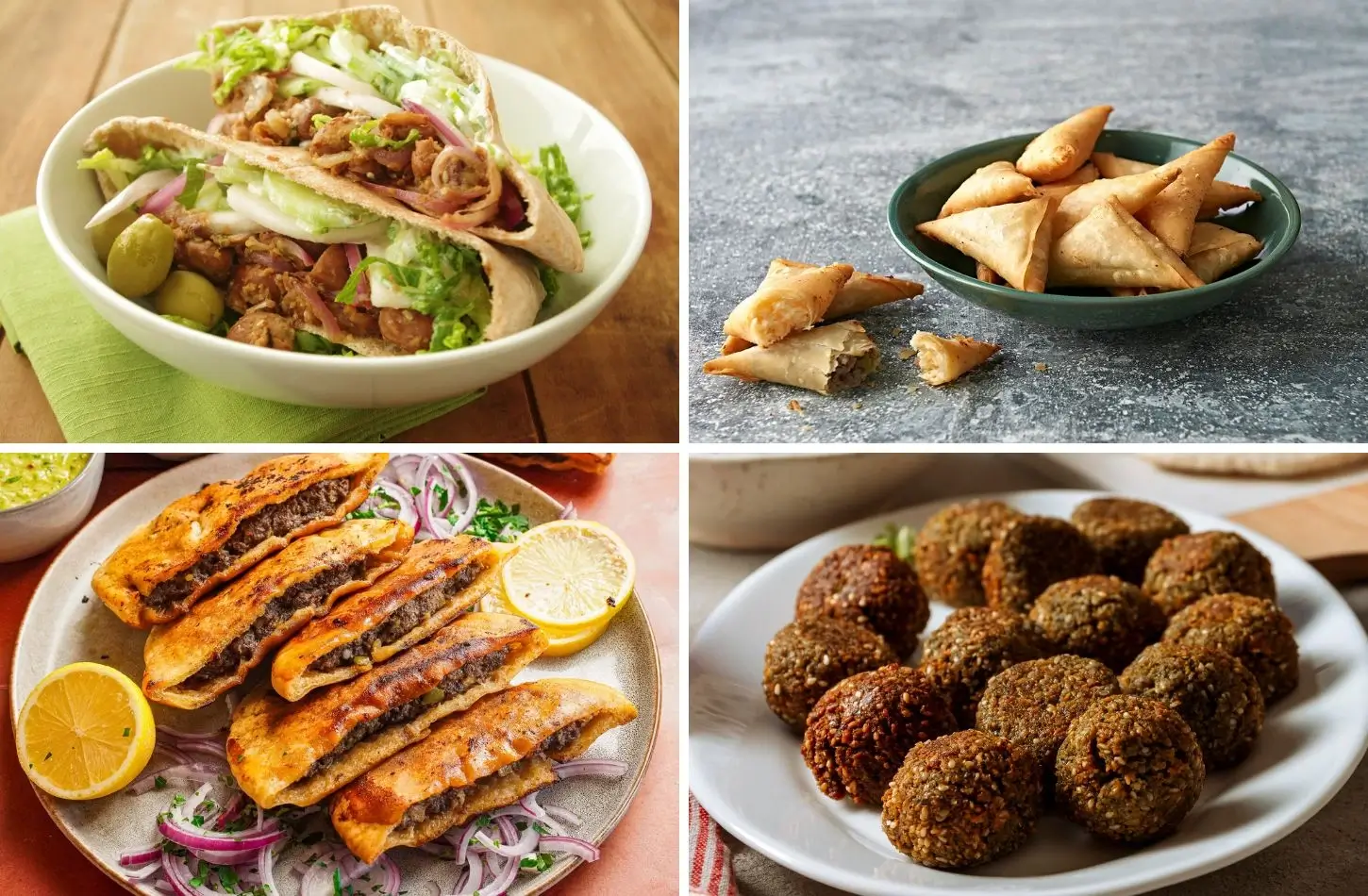
1. Taameya (Egyptian Falafel)
If there’s one dish that captures the essence of Egyptian street food, it’s ta’amiya. The Egyptian version of falafel, ta’amiya, is made from ground fava beans instead of chickpeas, mixed with fresh herbs—like coriander, parsley, and dill—and then deep-fried until the outer layer is crispy and golden brown while the inside remains bright green and tender. It’s served in a warm pita bread with tahini sauce, pickles, and fresh tomatoes.
In every Cairo neighborhood, you’ll find a ta’amiya vendor starting their day before sunrise. The queue forms early, and for good reason. Our guides will always point you to the best local spot near your accommodation—this isn’t the kind of snack you’d want to grab at a tourist restaurant when you can get the authentic taste in minutes.
Where to try it on your Egypt trip: Khan El Khalili market area in Cairo, or any busy local breakfast street in Luxor or Aswan, early in the morning.
2. Ful Medames Sandwich
Ful medames is one of the oldest dishes in the world — archaeological evidence suggests Egyptians have been eating fava beans for over 5,000 years. As a snack, it appears in sandwich form: slow-cooked fava beans seasoned with olive oil, lemon juice, garlic, and cumin, stuffed into baladi bread and topped with a boiled egg, pickles, or fresh chili, depending on who is making it.
It is the fuel that runs Egypt. Construction workers, schoolchildren, office workers, and government ministers all eat ful medames. On our Cairo day tours, we always make time for a proper ful medames breakfast at a local spot — it is the most honest introduction to Egyptian food culture you can get.
Where to try it on your Egypt trip: Any Egyptian breakfast café or street vendor, from Cairo to Aswan. Mornings only — most vendors sell out by 12 pm.
3. Sambousek (Crispy Stuffed Pastries)
If you’re looking for a snack that perfectly blends crunch with rich, savory fillings, sambousek is a must-try. These small, golden pastries are typically filled with spiced minced meat or creamy cheese, then either deep-fried or baked until perfectly crisp. The outer layer is thin and flaky, while the inside delivers a warm, flavorful bite that makes them incredibly addictive—especially when served fresh out of the fryer.
Sambousek holds a special place in Egyptian food culture, particularly during the holy month of Ramadan, when it appears on almost every iftar table. However, you don’t need to wait for a special occasion to enjoy it. Bakeries and street vendors across Cairo and other major cities prepare sambousek daily, often offering fillings such as spiced beef, feta-style cheese, or even vegetables. It’s the kind of snack that works equally well as a quick bite on the go or as part of a larger traditional meal.
Where to try it on your Egypt trip: Local bakeries and street food stalls in Cairo, especially in bustling areas like Khan El Khalili, or during Ramadan evenings when fresh batches are constantly being made and served hot.
4. Hawawshi (Egyptian Meat Pie)
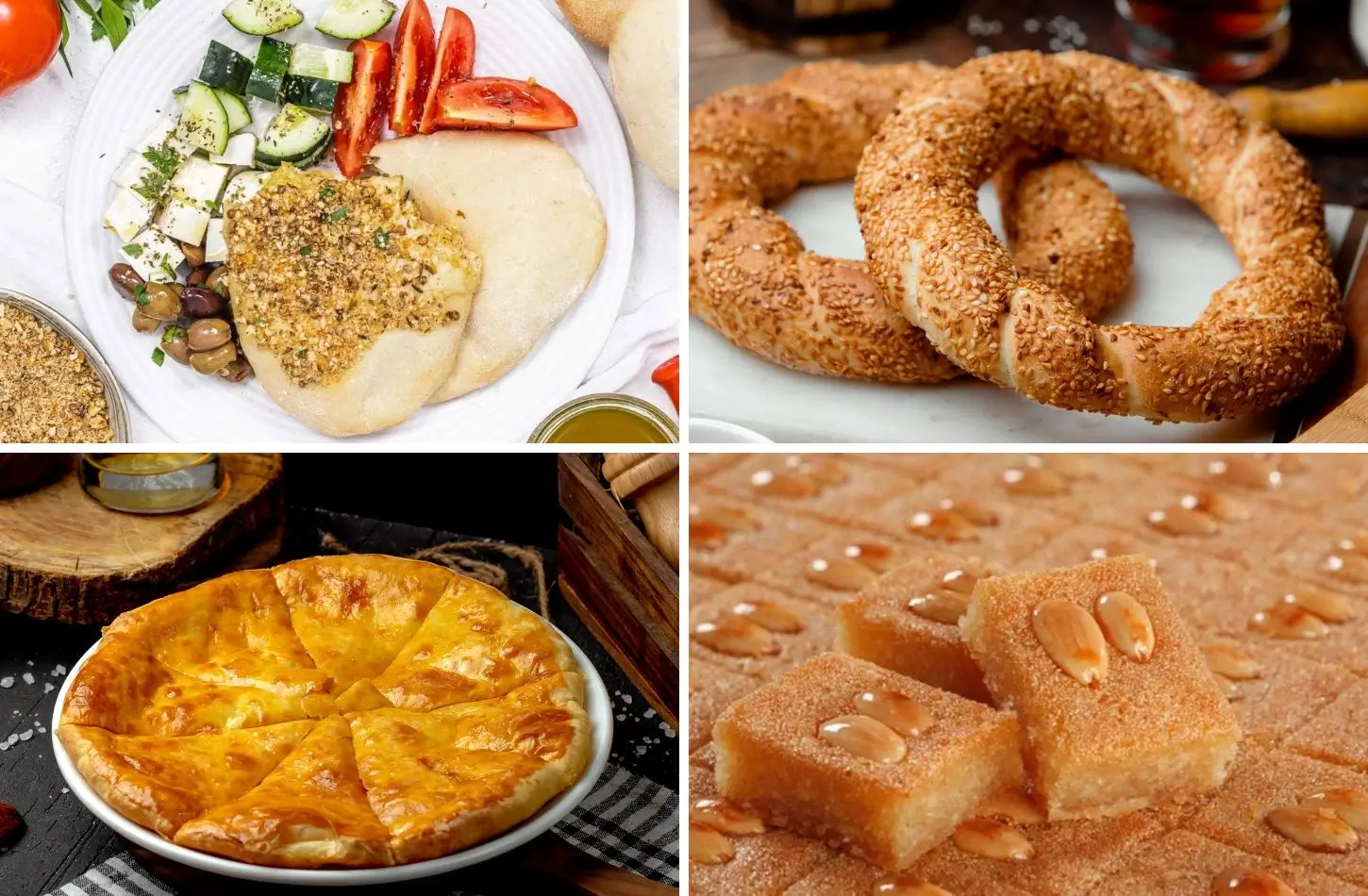
Hawawshi is a combination of spiced minced meat and bread baked in a very hot oven. The filling—beef or lamb mixed with onions, green peppers, chili peppers, and a blend of warming spices—is stuffed into pita bread and baked until the top is incredibly crispy and the inside is soft and aromatic. It’s a delicious, satisfying, and incredibly tempting meal.
Hawawshi is especially popular in Alexandria, which boasts some of the best hawawshi bakeries in the country. When we organize group trips to Alexandria, stopping for hawawshi is a must—it’s an essential part of the itinerary.
Where can you try it on your trip to Egypt? At bakeries and street food stalls in Cairo and Alexandria. Look out for the smoke from the oven—it’s always a good sign.
5. Simit (Egyptian Pretzel)
Simit is a round bread topped with sesame seeds, lighter than a bagel, chewier than a breadstick, and incredibly filling when eaten warm. Street vendors carry it stacked on long sticks or in baskets on their heads, selling it for just a few Egyptian pounds.
Simit, paired with white cheese or a cup of sweet tea, is one of the simplest and most delicious breakfasts in Egypt. We often pass vendors selling it early in the morning near major tourist sites, and a warm simit is a much better start to a day of sightseeing than anything served in a hotel lobby.
Where can you try it on your trip to Egypt? Street vendors are near major landmarks, markets, and metro stations throughout Cairo and Luxor.
6. Sweet Basbousa
Basbousa is one of Egypt’s most famous desserts. It’s a golden, dense cake made from semolina, dipped in syrup as soon as it comes out of the oven, and garnished with a slivered almond or shredded coconut. The semolina, soaked in syrup, gives it a uniquely moist, grainy texture, making it perfect.
Basbousa is made everywhere, from Egyptian grandmothers to bakeries. During Ramadan, it’s served at iftar tables across the country. And on our tours, when our guests join us for tea with a local family—something we include in many of our specially designed tour packages—basbousa is often the main course.
Where can you find it during your trip to Egypt? In bakeries and pastry shops throughout the country. Basbousa is especially delicious in Cairo’s Muslim Quarter and in Luxor’s traditional cafes.
7. Feteer Meshaltet
Feteer Meshaltet is an ancient Egyptian pastry, and once you taste it, you’ll understand the secret to its enduring popularity for thousands of years. It’s a flaky, multi-layered pastry made by repeatedly folding butter into the dough, a technique similar to puff pastry, but with a completely unique texture. It can be enjoyed sweet—with a drizzle of honey or a cream filling—or savory, filled with white cheese, minced meat, or eggs.
Watching a skilled feteer maker at work is one of the most enjoyable aspects of visiting Egyptian markets. They stretch the dough to an amazing thinness, fold it with a speed that suggests decades of experience, and then place the finished pastry in a wide, flat oven. The result is ready in minutes.
Where can you try it on your trip to Egypt? Specialty feteer shops in the old quarters of Cairo and in the local market of Luxor. It’s definitely worth seeking out—it’s not a snack you’ll find everywhere.
8. Dukkah with Bread
Dukkah is a popular Egyptian spice that has spread worldwide, but its flavor is at its best in its homeland. It’s a dry blend of ground hazelnuts or chickpeas, sesame seeds, coriander, cumin, and black pepper—characterized by its earthy, nutty, and aromatic notes. The traditional way to eat it is to first dip a piece of bread in olive oil, then press it into the dukkah, coating its oiled surface.
It’s one of those snacks that goes down the drain. The spice markets in Cairo sell wonderful dukkah, hand-mixed and served in paper cones—it’s also one of the best edible souvenirs from a trip to Egypt, as it’s lightweight and completely authentic.
Where can you try it on your trip to Egypt? Khan El Khalili spice market in Cairo. Buy some to take home—it lasts a long time and tastes great with good bread.
9. Roz Bel Laban (Rice Pudding)
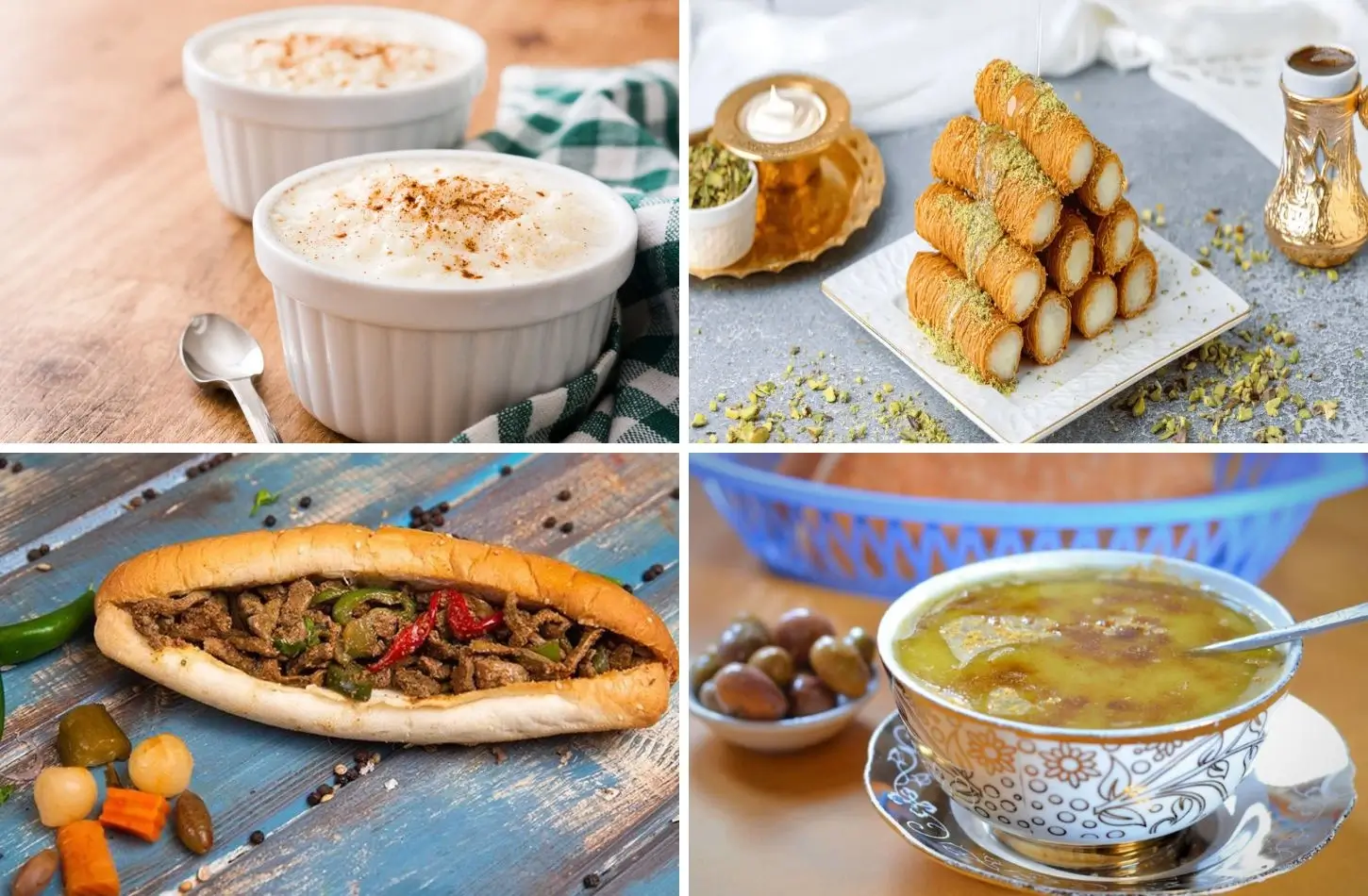
Rose Bel Laban is one of Egypt’s most delicious and comforting desserts. It’s a slow-cooked rice pudding made with whole milk and sugar, instantly recognizable by the addition of rosewater or vanilla. Served chilled in small cups and sometimes garnished with cinnamon or ground pistachios, it’s a true culinary delight in Egyptian cuisine.
Every Egyptian has memories associated with rose bel laban, whether from their grandmother’s kitchen, a late-night café, or a Ramadan evening. When travelers ask us about the best dessert after a long day of sightseeing, this is almost always the answer.
Where can you try it during your trip to Egypt? At the traditional Egyptian cafes and sweet shops scattered throughout Cairo, Luxor, and Alexandria. It’s best enjoyed in the evening
10. Kebda Sandwich (Liver Sandwich)
The liver sandwich isn’t for the faint of heart; it’s for the curious and the hungry. Slices of beef or lamb liver are fried over high heat with garlic, cumin, green chili peppers, and bell peppers, then stuffed into bread and eaten immediately while still hot. The flavor is intense, smoky, and absolutely delicious.
Alexandria is considered the undisputed capital of the liver sandwich in Egypt. Stalls in the Anfoushi and Old Port areas have been preparing it the same way for generations. When we take groups to Alexandria, the liver sandwich is always met with initial hesitation, but then it’s met with unanimous approval.
Where can you try it on your trip to Egypt? The food stalls in the streets of Alexandria are especially near the waterfront and the Old Port area. It’s also available from late-night street vendors in Cairo.
11. Chipsy (Egyptian Chips)
Not all Egyptian snacks have a centuries-old history. Chipsy, Egypt’s most popular potato chip brand, is a modern classic you’ll find in every kiosk, supermarket, and convenience store across the country. The chili-and-lemon flavor is fantastic, and the packaging design has remained virtually unchanged for decades.
On our long journeys between tourist sites, from Cairo to Alexandria, or along the Nile between Luxor and Aswan, our drivers always make sure to have Chipsy in their cars. It’s the quintessential roadside snack in Egypt, and the taste is completely authentic.
Where can you try it on your trip to Egypt? In every grocery store, gas station kiosk, and roadside shop in Egypt. It’s unmissable and well worth trying.
12. Konafa Fingers
Kunafa is one of the most popular Arabic desserts, and it makes a perfect snack when served in finger-shaped portions: thin strands of shredded wheat dough wrapped around a filling of sweetened clotted cream or ground nuts, then fried until golden brown and drizzled with a sugar syrup infused with orange blossom water. The contrast between its crispy crust and soft, sweet interior is simply divine.
During Ramadan, kunafa shops in Egypt operate around the clock to meet the increased demand. The best kunafa in Cairo can be found in the Sayeda Zeinab district, where specialist shops have perfected this recipe for generations. Our tour guides know the best places to sample it.
Where can you try it during your trip to Egypt? Sweet shops and pastry shops are located throughout Egypt, year-round. The best time to try it is during Ramadan when production is at its peak.
13. Bissara
Bissara is one of the most famous Egyptian dishes outside of Egypt, but it’s one of the most enjoyable experiences you can have while visiting Egypt. It’s a thick, creamy sauce made from dried fava beans cooked with garlic, cumin, and olive oil until smooth. It’s served warm with bread, sometimes drizzled with extra virgin olive oil and sprinkled with dried chili peppers.
Bissara is entirely vegetarian, very filling, and has a unique flavor that most foreign visitors haven’t experienced. On our food-focused tours of Old Cairo, bissara is one of the main dishes we sample.
Where can you try it on your trip to Egypt? At traditional Egyptian restaurants in Old Cairo, especially in areas away from the main tourist routes.
14. Zalabya (Egyptian Donuts)
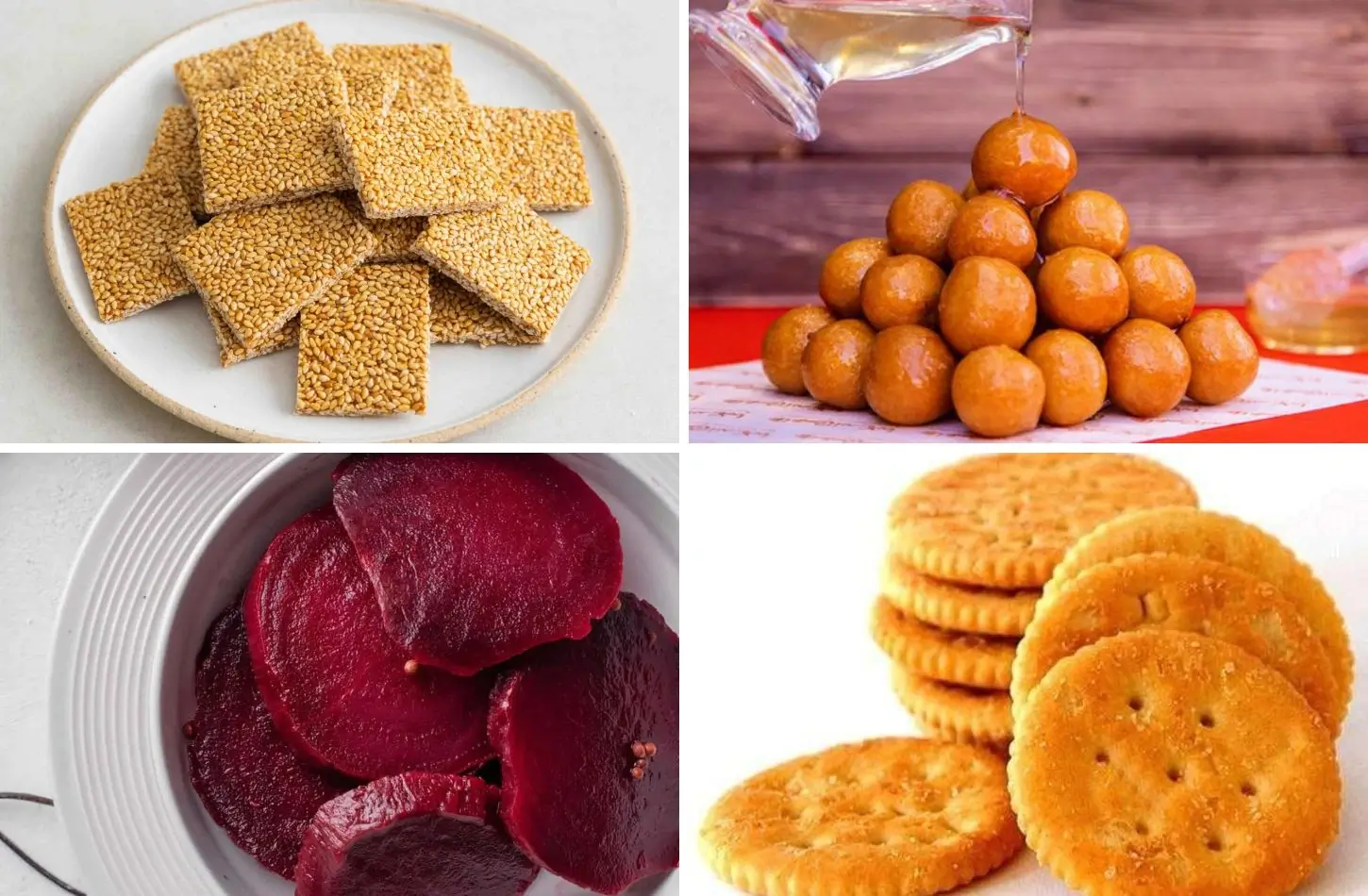
Zalabia are small, round pastries deep-fried in hot oil and immediately dipped in honey or syrup. They are light and fluffy, with a slightly crispy outer shell and a soft, tender interior, making it impossible to stop at just one. Street vendors prepare them by dropping small amounts of batter into hot oil, then lifting them out golden and shiny.
Zalabia are especially popular during Ramadan and Eid, but you can find them year-round in traditional markets and sweet stalls. Enjoying zalabia while it’s still warm from the oil, with the syrup dripping between your fingers, is one of those Egyptian experiences that isn’t mentioned in travel guides but stays with you for years.
Where can you try them during your trip to Egypt? Street vendors in local markets and at the evening souks in Cairo, Luxor, and Aswan.
15. Beetroot Pickles
Egyptian pickles, or torshi, are a unique category, and beetroot pickles are among the most prominent. They have a deep purple color and a sweet, tangy flavor, and are served as a side dish or a distinctive addition to sandwiches. The pickling liquid softens the beetroot while preserving its natural sweetness, and its vibrant color enhances everything it’s added to.
You’ll find beetroot pickles alongside falafel sandwiches, on hawawshi (Egyptian meat pie), and in the small spice bowls that accompany most Egyptian street food orders. While not a main dish, any delicious Egyptian snack is made more enjoyable with them.
Where can you try them during your trip to Egypt? They’re served with most street food in Egypt, or you can buy them fresh from local markets and pickle vendors.
16. Salty Biscuits (Biskoot Malah)
Biskoot malah are Egypt’s answer to the cracker — thin, lightly salted, and meant to be paired with white cheese, jam, or simply a cup of strong Egyptian tea. They appear in every household, on every breakfast table, and in the bags of every Egyptian who travels anywhere.
They are not a glamorous snack, but they are a deeply honest one. If you spend time with an Egyptian family — something we actively encourage on our tailor-made tours — biskoot malah will almost certainly appear at some point, usually alongside tea poured from a small glass pot and a conversation that lasts far longer than you planned.
Where to try it on your Egypt trip: Every Egyptian household, supermarket, and corner shop. Part of the fabric of daily life rather than a destination snack.
17. Semsemeh (Sesame Brittle)
Simsimah is a sweet treat made from just two ingredients: sesame seeds and caramelized sugar. These are pressed into thin flakes or small pieces and left to dry. The result is a sweet treat rich in sesame flavor, satisfyingly crunchy, and naturally sweet without being overpowering. Simsimah is sold by weight in paper bags in markets and confectioneries throughout Egypt.
It is also one of the oldest Egyptian sweets, as sesame has been cultivated in the Nile Valley for thousands of years, and sesame-based sweets appear in ancient Egyptian culinary descriptions. When you eat simsimah in a Cairo market, you are eating something Egyptians have been eating since the time of the pharaohs.
Where can you try it during your trip to Egypt? Find it at sweet stalls and vendors in markets all over Egypt, especially in Khan el-Khalili in Cairo and the popular Luxor market.
18. Ghorayeba (Butter Cookies)
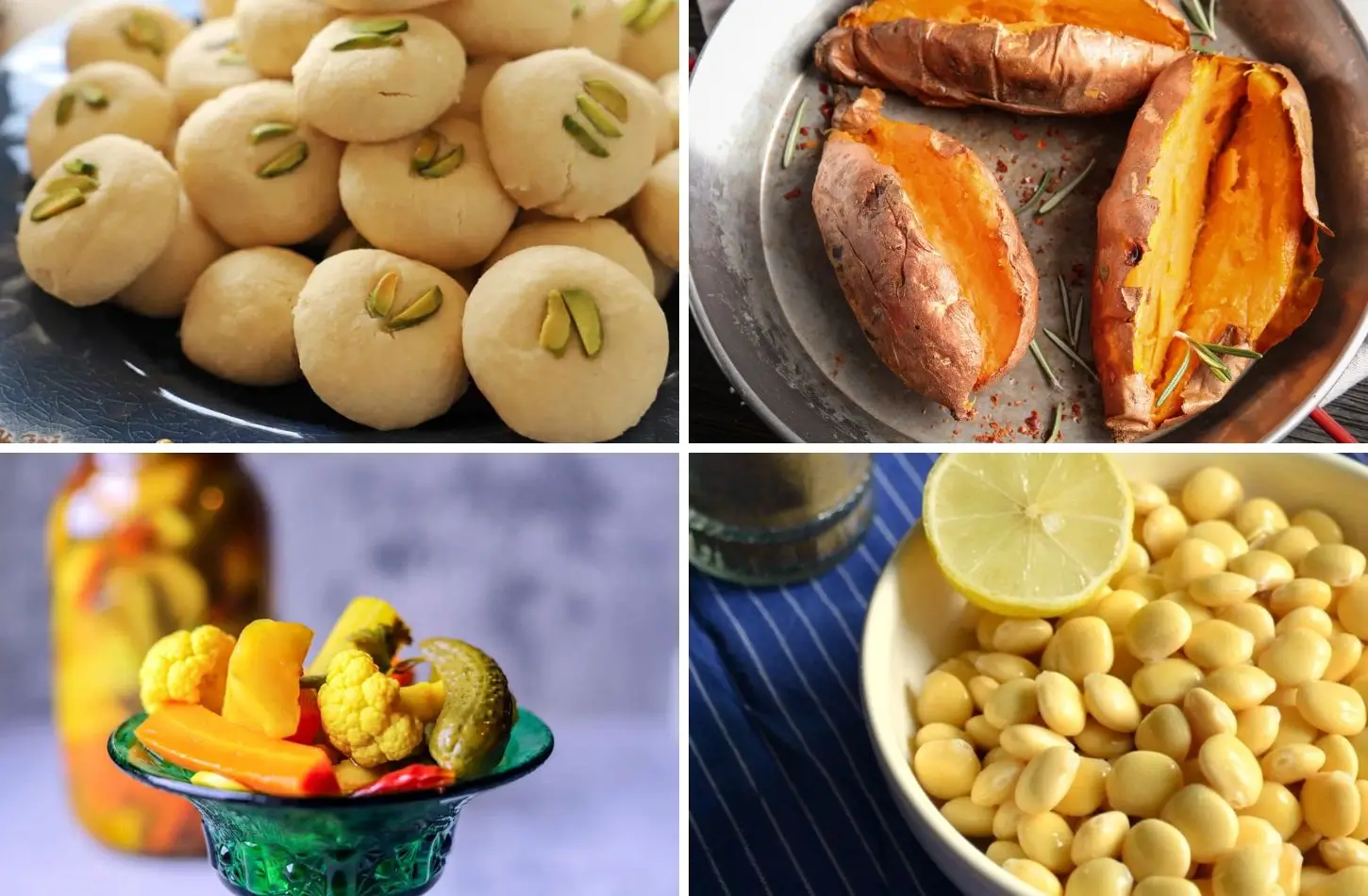
Ghoriba is a melt-in-the-mouth Egyptian butter cookie made from ghee, flour, and powdered sugar, without any raising agents. Its texture falls somewhere between that of a crumbly biscuit and a cloudy, airy treat. A shelled pistachio or almond is typically placed in the center of each one.
Ghoriba is closely associated with Eid celebrations. Bakeries across Egypt produce it in huge quantities in the days leading up to Eid al-Fitr and Eid al-Adha, and exchanging boxes of ghoriba between families is an annual tradition. However, it’s available year-round in bakeries and pastry shops and is considered the perfect accompaniment to Egyptian tea.
Where can you try it during your trip to Egypt? It’s available in bakeries and pastry shops throughout Egypt, and is especially plentiful and fresh during Eid celebrations.
19. Roasted Fava Beans (Termis)
Lupin beans—different from the fava beans used in falafel and ful medames—are boiled, salted, and sold in small bags by street vendors. Lupin beans have a firm texture and a slightly bitter taste, and they are incredibly delicious. Egyptians eat them much like people in other countries eat peanuts: constantly, spontaneously, and in large quantities.
You’ll find lupin vendors everywhere in Egypt—at bus stops, outside mosques, near the entrances to major archaeological sites, and along the Alexandria Corniche. Lupin beans are sold hot or at room temperature, and the ritual of eating them—squeezing the outer shell to release the bean and putting it in your mouth—is a strangely satisfying experience.
Where can you try them during your trip to Egypt? You’ll find them at street vendors throughout Egypt, especially near markets, transportation hubs, and popular gathering places.
20. Helwa (Halva)
Egyptian halva is made from tahini and sugar, sometimes with the addition of pistachios, almonds, or dried fruit. It has a thick, slightly crumbly texture and a rich, nutty flavor that gradually intensifies with each bite. It’s sold by weight in large blocks at markets and grocery stores, and cut to order with a wire.
Halva is one of the most popular and energizing snacks in Egypt, which explains its enduring popularity. A small piece with a cup of mint tea makes for the perfect Egyptian afternoon treat, and it’s rare to see a group strolling through Cairo’s markets without someone buying a block to take home.
Where can you try it during your trip to Egypt? At Khan el-Khalili market in Cairo, and at grocery stores throughout Egypt. Buy it freshly cut rather than pre-packaged for the best flavor.
21. Torshi (Pickled Vegetables)
Egyptian torsha is a delightful assortment of pickled vegetables—turnips, carrots, cucumbers, green peppers, and cauliflower—all preserved in a spiced brine and sold in large jars at market stalls and local restaurants. The turnips turn a vibrant pink from the beets in the brine, while the cucumbers remain crisp and tangy, and the cauliflower deeply absorbs the spices.
Torsha is the element that binds together Egyptian snack culture. It’s present on almost every table, with every popular food order, and in nearly every Egyptian home. It’s the country’s quintessential flavor.
Where can you try it during your trip to Egypt? Fresh torsha is sold at market stalls throughout Egypt. Khan el-Khalili in Cairo has many specialized pickle vendors. It’s also served as a side dish in virtually every Egyptian street food restaurant.
22. Date Bars (Agwa)
Ajwa is a pastry filled with sweetened crushed dates, usually encased in a flaky, delicate dough, and shaped into small discs or fingers. Dates have been cultivated in Egypt since ancient times, and ajwa carries this history in every bite. Its natural sweetness, filling properties, and portability make it a favorite snack on long journeys and festive occasions.
During Eid al-Fitr, ajwa and other date-based pastries are exchanged between families as gifts. On our long journeys, especially overnight or full-day Nile cruises, we offer ajwa as part of the refreshments onboard. It’s a light snack that satisfies without weighing you down.
Where can you find it on your trip to Egypt? At bakeries throughout Egypt, especially in Upper Egypt, where date palm cultivation is widespread. It’s also readily available in Luxor and Aswan.
23. Baladi Bread with Cheese
Baladi bread—the traditional round Egyptian flatbread baked in wood-fired ovens and lightly browned at the edges—is a staple of Egyptian cuisine. Served with a salty white cheese, it’s one of the simplest and most delicious snacks in the country. The cheese used is usually a softer, locally made, salty white cheese similar to feta, sold fresh from market stalls.
No Egyptian breakfast is complete without baladi bread. It’s served with every street food order. Every meal is finished with it. Understanding Egyptian cuisine means understanding baladi bread—and the best way to do that is to buy a loaf straight from the bakery oven, still warm and lightly browned, and eat it immediately.
Where can you try it during your trip to Egypt? Baladi bakeries are found in every neighborhood in Egypt, and you can usually tell by the long queues and the delicious aroma of freshly baked bread wafting from the street. Buy it around 7:00 a.m.—it’s at its tastiest when it’s fresh out of the oven.
24. Sweet Corn (Dora Maslouk)
Boiled or grilled corn—known as “dawrat maslouk”—is one of Egypt’s most popular street foods. Vendors expertly prepare the corn from large pots of boiling water or on charcoal grills, serving it hot and salted, sometimes drizzled with butter or spices. It’s a simple, warming, and incredibly satisfying meal on a chilly Egyptian evening.
Along the Nile Corniche in Luxor and Aswan, corn vendors are a common sight at dusk, as local families stroll along the riverbanks in the evening, enjoying a snack of corn. It’s one of those little treats that adds a touch of authentic Egyptian charm to an evening.
Where can you try it during your trip to Egypt? Along the Nile Corniche in Luxor and Aswan in the evening, and in the bustling markets throughout Egypt.
25. Sweet Potato (Batata Halwa)
Roasted sweet potatoes are a popular winter snack in Egypt. Starting in October, street vendors roam the neighborhoods with carts carrying wood-fired ovens, and the aroma of caramelized sweet potato skins is among the most evocative of a Cairo winter. The potatoes are slowly cooked until their skins turn a deep golden brown and their flesh becomes soft and sweet, almost like jam.
Sold wrapped in newspaper or plain paper and eaten with a wooden skewer, they are one of those snacks that remind us that simple food, when prepared well, is always the best. During our winter tours of Egypt, finding a sweet potato cart is a small but worthwhile endeavor.
Where can you try them during your trip to Egypt? Street vendors in Cairo and other major cities operate from October to February. Follow the scent of the smoke.
3Egyptian Snacks and Their Culture
How Egyptians Eat Snacks
In Egypt, food is primarily a means of socializing. Snacks are shared, not monopolized. When Egyptians sit together—in a café, a market, or even on a doorstep—food is offered. Tea is poured. Plates are passed around. You are expected to eat, and refusing more than once is considered impolite. As a visitor, you’ll find this one of the most fascinating cultural experiences Egypt has to offer.
The tea tradition is an integral part of Egyptian snack culture. Egyptian tea—black, strong, sweet, and served in small cups—accompanies almost every snack on this list. Learning to drink tea the Egyptian way, slowly and engagingly, is part of the experience of being in Egypt.
Street vendors are the backbone of the snack scene. You’ll rarely find the best falafel, koshari, and zalabia in restaurants. You’ll find them at unassuming stalls that have been in the same place for thirty years, run by people who have been making the same thing every day their whole lives. Our guides know the locations of these kiosks, and taking you there is one of our best skills.
4Tips for Eating Egyptian Street Food:
Follow the locals. If you see a queue of Egyptians outside a food stall, join them. Egyptians know where to find good food, and a crowded stall is the best indicator of the country’s food quality.
Be adventurous at the beginning of your trip. Your taste buds will quickly adjust to new flavors, and snacks that seem strange on the first day—like liver, basra (a type of bean stew), and lupini beans—will be completely familiar by the third day.
Snack with local drinks. Hibiscus tea, a dark red hibiscus drink that can be enjoyed hot or cold, is the perfect accompaniment to sweets. Asab—freshly squeezed sugarcane juice—is one of the most refreshing drinks in the world and is available from street vendors all over Egypt. Avoid tap water and stick to bottled or freshly squeezed juices.
Eat in the morning. The best Egyptian street food—like falafel, ful medames, and feteer—is made specifically for the morning rush and often sells out by mid-morning. Starting early is always rewarded in Egypt.
5Two Egyptian Snack Recipes to Try at Home
Homemade Taameya (Egyptian Falafel)
The secret to taameya is the fava beans — not chickpeas. If you use chickpeas, you are making Lebanese falafel, which is excellent but not what we are talking about here.
Ingredients:
- 2 cups dried fava beans, soaked overnight and peeled
- Large handful of fresh flat-leaf parsley
- A large handful of fresh coriander
- Small handful of fresh dill
- 1 medium white onion, roughly chopped
- 4 garlic cloves
- 1 tsp ground cumin
- 1 tsp ground coriander
- Salt and pepper to taste
- Sesame seeds for coating
- Sunflower oil for frying
Method: Drain and dry the soaked fava beans thoroughly. Combine all ingredients except the sesame seeds and oil in a food processor and pulse to a coarse paste — not smooth, the texture should still have some grain to it. Rest the mixture in the refrigerator for 30 minutes. Shape into small, flat patties, press sesame seeds onto both sides, and fry in hot oil until deeply golden. Serve immediately in warm pita bread with tahini, pickles, and sliced tomato.
Basbousa (Egyptian Semolina Cake)
Basbousa is one of the easiest Egyptian sweets to make at home, and one of the most rewarding. The key is pouring the syrup over the cake the moment it comes out of the oven, while both are still hot.
Ingredients:
- 2 cups fine semolina
- 1 cup full-fat yogurt
- ½ cup caster sugar
- ½ cup unsalted butter, melted
- 1 tsp baking powder
- Blanched almonds to decorate
For the syrup:
- 1 cup caster sugar
- ½ cup water
- 1 tsp lemon juice
- 1 tsp rose water
Method: Make the syrup first: combine sugar, water, and lemon juice in a small saucepan, then simmer for 8 minutes, until slightly thickened. Add the rose water, stir, and set aside to cool. For the cake: mix semolina, sugar, yogurt, melted butter, and baking powder until combined. Pour into a greased baking tin and smooth the surface. Score into diamond shapes and press an almond into the center of each piece. Bake at 180°C for 25 minutes until golden. As soon as the basbousa comes out of the oven, pour the cooled syrup evenly over the hot cake. Allow to absorb for 15 minutes before serving.
6Experience Egyptian Food Culture with Egypt Holiday Makers
The snacks on this list are not things you need to seek out on your own. They are things you walk past, smell, and are offered as a matter of course when you travel through Egypt with people who know it well.
Our guides eat this food every day. They know which taameya vendor in Cairo has been frying since 5 am, which sweet shop in Luxor makes the best basbousa in Upper Egypt, and which Aswan café serves the roz bel laban that no tourist ever finds on their own. When you travel with Egypt Holiday Makers, the food is part of the itinerary — not an afterthought.
If you are planning an Egypt trip and want to experience the country through its food, culture, and history, our Egypt tour packages are built around exactly that. Our Cairo day tours include time in local markets and traditional neighborhoods. Our Nile cruises feature Egyptian meals prepared on board. And our tailor-made holidays can be designed with a food-first approach if that matters most to you.
Contact us and tell us what you’d like to see in Egypt. We’ll take care of the rest, including recommending the best restaurants in the city.
7FAQs About Egyptian Snacks
What is the most popular Egyptian snack?
Taameya — Egypt’s fava bean falafel — is the most universally loved Egyptian street snack. You will find it being fried at breakfast time in every city, town, and village across the country. Served in pita bread with tahini and pickles, it is the snack that defines Egyptian street food culture.
What is the most common food in Egypt?
Baladi bread and ful medames are the twin foundations of Egyptian daily food. Together, they form the backbone of the Egyptian breakfast, appear at every meal, and sustain the country from Cairo to Aswan. Taameya and Hawawshi are the most common snack foods eaten away from home.
What do Egyptians eat for breakfast?
A traditional Egyptian breakfast is a spread rather than a single dish — ful medames, taameya, baladi bread, white cheese, olives, tomatoes, hard-boiled eggs, and feteer meshaltet all appearing together on the table. It is one of the most generous and satisfying breakfasts in the world, and our guests who experience it for the first time almost always say it is a highlight of their trip.
Where can I try Egyptian snacks as a tourist?
The honest answer is: everywhere. Cairo’s Khan El Khalili market area, the corniche in Luxor, the seafront in Alexandria, the market streets of Aswan — Egyptian snack culture is not hidden in specialist restaurants. It is on the street, at every corner, available to anyone willing to follow the smell of something frying and join the queue.
Can I buy Egyptian snacks to take home?
Yes. Dukkah, semsemeh, helwa, and date bars all travel well and make excellent gifts. The Khan El Khalili market in Cairo is the best single place to buy food souvenirs. Packaged basbousa mix and tahini are also available in Egyptian supermarkets and in Middle Eastern grocery shops worldwide.
8conclusion
Egyptian snacks are a map of the country’s history, geography, and character. The fava beans used in falafel and ful medames have been cultivated in the Nile Valley for five thousand years. The sesame seeds in simsimah were pressed for oil in the kitchens of the ancient Egyptians. And the rosewater in rice pudding arrived with Arab traders in the Middle Ages and has remained in Egypt ever since. Every snack on this list has a story, and tasting them is one of the easiest ways to understand Egypt.
Come hungry. Stay curious. And if someone offers you something you don’t recognize on the streets of Cairo, have it. It will undoubtedly be one of the most delicious things you’ll ever taste.
Ready to plan your Egypt trip? Let's find your perfect dates.
A local expert replies within hours with a tailor-made itinerary and honest advice.