
The Citadel of Qaitbay is one of Egypt’s most remarkable historical landmarks, standing proudly on the Mediterranean coast of Alexandria. This fortress not only reflects the military ingenuity of the Mamluk era but also offers visitors a glimpse into the rich layers of Egypt’s past, set against the scenic beauty of Egypt beaches along the Mediterranean coast. For centuries, the citadel has served as a defensive stronghold, a symbol of power, and a testament to architectural mastery. In this article, we’ll explore its history, architecture, purpose, fascinating facts, and interior features, providing an in-depth look at one of Alexandria’s most treasured monuments.
A Historical Overview of the Citadel of Qaitbay
The Citadel of Qaitbay was built in the 15th century, during the reign of Sultan Al-Ashraf Sayf al-Din Qa’it Bay, a powerful Mamluk ruler. Constructed in 1477 AD, its primary purpose was to defend the city of Alexandria from invading forces, particularly the Ottoman Turks and European navies. Strategically located on the eastern tip of Pharos Island, the citadel occupies the very site of the ancient Lighthouse of Alexandria, one of the Seven Wonders of the Ancient World. Although much of the lighthouse was destroyed by earthquakes, the citadel’s construction preserved the area’s historical significance while adding a new layer of defense to Alexandria’s coast.
The citadel played a vital role during the Mamluk period and continued to serve military purposes under Ottoman rule. Throughout its history, it has witnessed numerous battles and sieges, cementing its status as a fortress of strategic importance. Today, it stands as a cultural and historical symbol, attracting visitors from all over the world who are eager to connect with Egypt’s rich past.
Architectural Marvels of the Citadel of Qaitbay
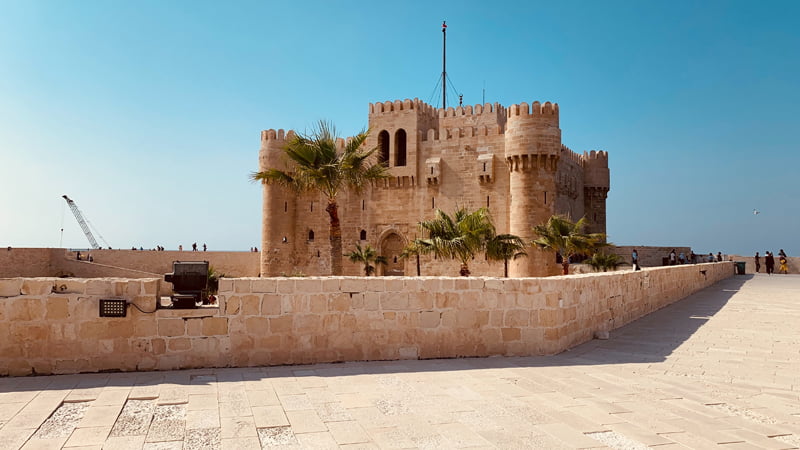
The design of the Citadel of Qaitbay demonstrates the sophistication of Mamluk military architecture. Its walls, made of massive limestone blocks, rise impressively over the sea, providing both defense and a stunning visual impact. The fortress features a square layout with circular towers at each corner, offering strategic vantage points to spot approaching enemies.
The main entrance is fortified with heavy gates and a drawbridge, showcasing the careful planning that went into protecting the citadel from naval attacks. Inside, the citadel’s walls are adorned with inscriptions and decorative patterns characteristic of Mamluk artistry. The combination of functional military design and elegant craftsmanship makes the citadel a unique example of defensive architecture in the medieval Islamic world.
One notable aspect of the architecture is the use of the citadel’s location to its advantage. Perched on a rocky promontory, it overlooks the Mediterranean, allowing defenders to monitor the horizon and control access to the harbor. This natural elevation, combined with its thick walls and strong towers, made it nearly impenetrable during its early years.
The Purpose and Significance of the Citadel
The primary purpose of the Citadel of Qaitbay was military. It was built to protect Alexandria, a vital trade and naval hub, from potential invasions. Over time, however, it also became a symbol of the Mamluk Sultanate’s authority and architectural prowess. The fortress’s presence reinforced the city’s defenses and demonstrated the sultan’s ability to safeguard his territories.
Beyond its military function, the citadel also served administrative and residential purposes. Parts of the fortress were used as barracks for soldiers, while other sections accommodated the ruler and his officials during their visits to Alexandria. This dual role as both a military stronghold and a seat of power reflects the multifunctional nature of Mamluk architecture, where practicality and prestige were intertwined.
The citadel’s significance extended into cultural and historical realms as well. By building the fortress on the site of the legendary Lighthouse of Alexandria, Sultan Qa’it Bay not only honored the past but also cemented his legacy in Egypt’s long narrative of maritime defense and innovation.
Fascinating Facts About the Citadel of Qaitbay
The Citadel of Qaitbay is full of intriguing stories and historical details. For example, it is often mistaken for a medieval castle built solely for display, but its defensive features were highly practical and essential for the city’s survival. Another interesting fact is that the citadel has endured centuries of natural and man-made challenges, including naval bombardments, earthquakes, and weathering from the salty sea air.
The fortress has also inspired artists, historians, and writers throughout the centuries. Its silhouette against the Mediterranean sunset is one of the most photographed scenes in Alexandria. Tours often share legends of hidden tunnels and secret passages, although much of the citadel’s interior remains accessible to the public for educational and cultural tours.
Visitors are often amazed by the citadel’s strategic use of space. The towers provide panoramic views of the city and the sea, while the inner courtyards once housed soldiers, weaponry, and supplies. The combination of defensive ingenuity and aesthetic design makes the citadel not just a historical site but also a testament to human creativity in architecture and urban planning.
Exploring the Interior of the Citadel
Stepping inside the Citadel of Qaitbay, visitors can explore its impressive interior spaces that blend military functionality with artistic elements. The inner courtyards are spacious, providing room for training, drills, and storage of arms and provisions. The fortress also contains rooms that were once used as living quarters for the garrison and occasional royal visitors.
Many areas of the citadel display Mamluk decorative elements, including intricate stone carvings and inscriptions. These artistic touches highlight the importance of aesthetics even in structures designed primarily for defense. The towers, some of which are accessible to tourists, offer breathtaking views of Alexandria’s coastline and the Mediterranean Sea. From these vantage points, visitors can imagine how defenders once monitored approaching fleets and prepared for battle.
The interior also contains remnants of old cannons and other military equipment, providing insight into the weapons and strategies employed by the Mamluks. Walking through these historic halls, one can feel the weight of centuries of history and the resilience of a fortress that has withstood the test of time.
Visiting the Citadel of Qaitbay Today
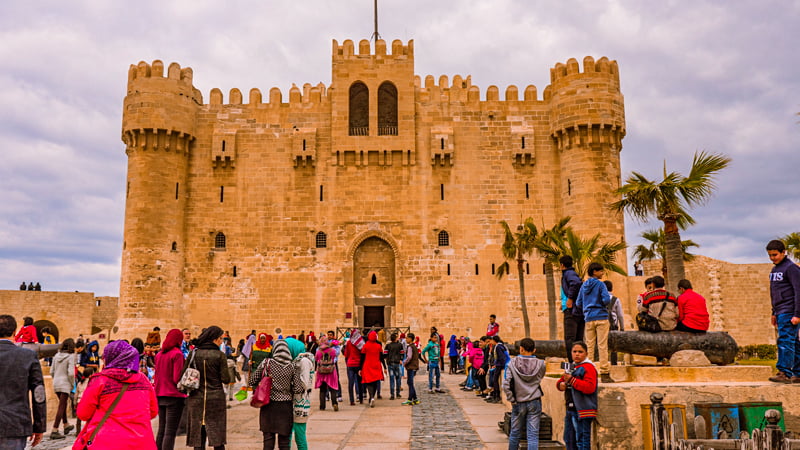
Today, the Citadel of Qaitbay is a major tourist attraction and a cultural landmark in Alexandria. It has been carefully preserved and partially restored to allow visitors to experience its historical grandeur.
The location of the citadel makes it an ideal spot for photography and sightseeing. The surrounding area features beautiful promenades along the Mediterranean coast, cafés, and local markets, creating a vibrant atmosphere that combines history with contemporary life. Many visitors plan their trips to coincide with sunrise or sunset, when the fortress is bathed in golden light, creating a truly memorable experience.
In addition to its appeal as a tourist site, the citadel also serves as an educational resource. Schools, universities, and history enthusiasts frequently visit to study its architecture, military design, and historical context. Exhibits within the fortress provide information about the Mamluk period, the site of the ancient lighthouse, and the broader history of Alexandria as a major Mediterranean port city.
Conclusion: A Timeless Symbol of Alexandria
The Citadel of Qaitbay is more than just a fortress; it is a living testament to Egypt’s rich history, architectural innovation, and strategic importance along the Mediterranean coast. From its construction during the Mamluk era to its enduring presence today, the citadel tells a story of power, defense, and cultural heritage.
Visitors to Alexandria will find that exploring the citadel offers a unique opportunity to step back in time and witness the ingenuity and artistry of a bygone era. Its walls, towers, and courtyards continue to inspire awe, while its historical significance provides endless opportunities for learning and discovery. For anyone interested in history, architecture, or simply breathtaking coastal views, the Citadel of Qaitbay remains an essential destination, bridging Egypt’s past and present in a truly unforgettable way.